
The Inside Scoop on One of Florida’s Peskiest Weeds
Key Nutsedge Weed Details
- Nutsedge is a perennial sedge that regrows every year from underground tubers rather than seeds.
- Conventional pre-emergent herbicides are useless against it.
- One tuber left in the soil can multiply into close to 2,000 new plants and nearly 7,000 new tubers within a single growing season.
- Florida lawns can get yellow nutsedge, which is easier to manage, or purple nutsedge, which is more difficult to control.
- The right selective herbicide, applied at the correct time and repeated across multiple seasons, can eliminate nutsedge.
- Hand-pulling makes things worse.
- Building a denser, better-drained lawn over time makes future infestations harder to establish.
- Luv-A-Lawn is here to help Florida residents with local, professional weed control.
Get to Know Nutsedge
Have you seen a section of your lawn growing faster than the rest? Maybe it’s a slightly different shade of green and looks a little different than your normal grass. That’s probably the nutsedge weed, which is designed for survival.
Nutsedge belongs to the sedge plant family. The anatomy and reproductive strategy are different from your regular grass. Also, the underground structure that keeps it alive is unlike anything in the grass family. Learn more about sedges from the University of Florida.
Leaves emerge in sets of three from the base of each stem, they’re stiffer and thicker than typical turf blades, and the whole plant grows with an urgency that most lawn grasses simply can’t match during Florida summers.
Below ground is where the real problem hides. Nutsedge roots extend outward through a network of underground stems that end in small, hardened tubers called nutlets. These nutlets are built to last.
A nutlet can withstand herbicide, hand-pulling, and drought…sometimes for years. Then it produces a new plant when conditions shift in its favor. That’s the core reason nutsedge is so difficult to eliminate.
But with expert strategies from the team at Luv-A-Lawn, you can solve your nutsedge problem!
What Does Nutsedge Look Like?
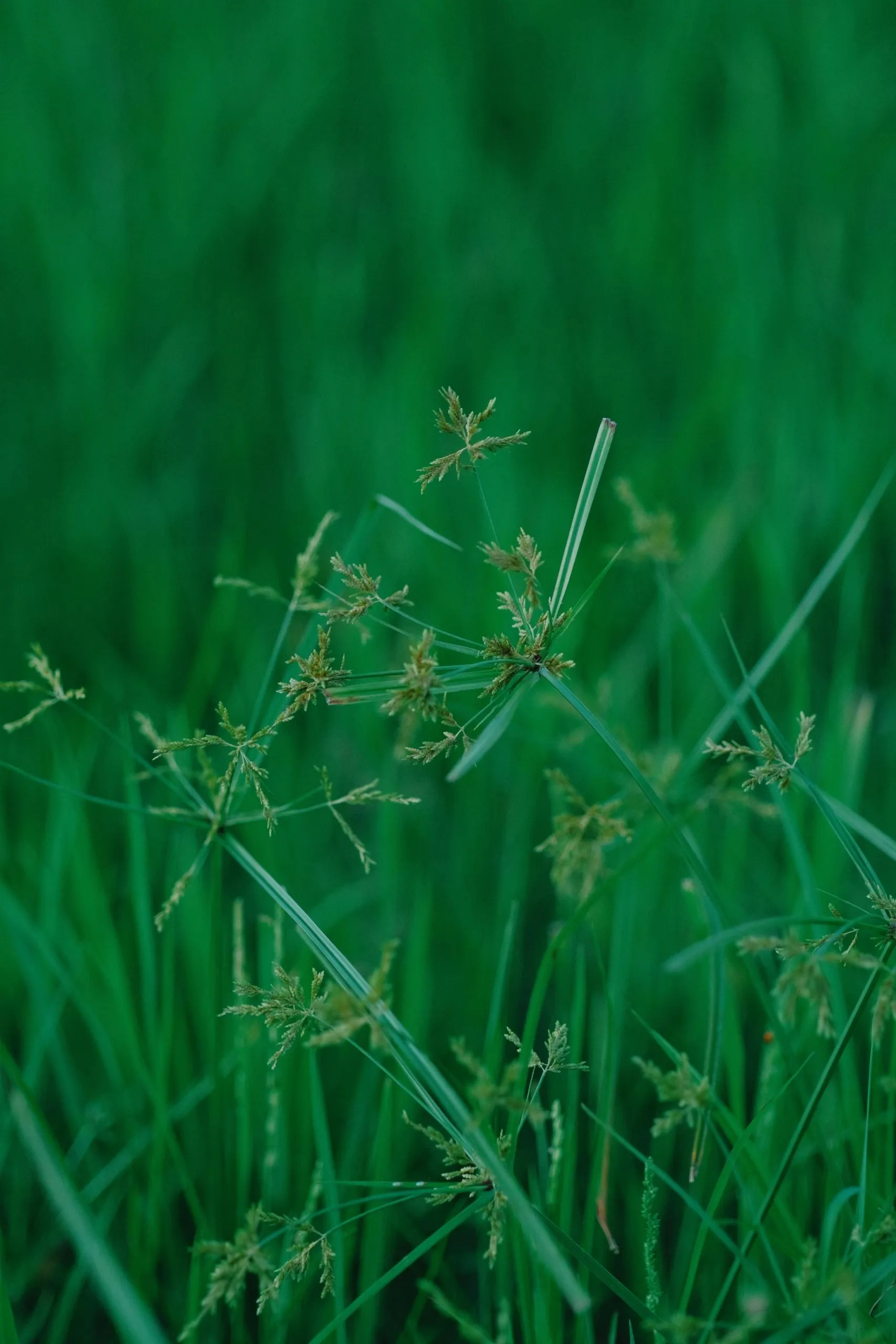
The stem is the most reliable way to tell if it’s nutsedge or not. Roll a stem between your fingers. Nutsedge stems have a triangular cross-section. Grass stems are either round or flat.
Beyond the stem test, look for:
- Color: a brighter, more yellow-green tone than the surrounding turf, most obvious in peak summer heat
- Leaf arrangement: three blades radiating outward from the same base point on the stem
- Vertical growth: shoots that consistently rise above the surrounding grass before the next mowing
- Leaf texture: a faint waxy sheen that gives nutsedge leaves a slightly different reflective quality than typical turf grass
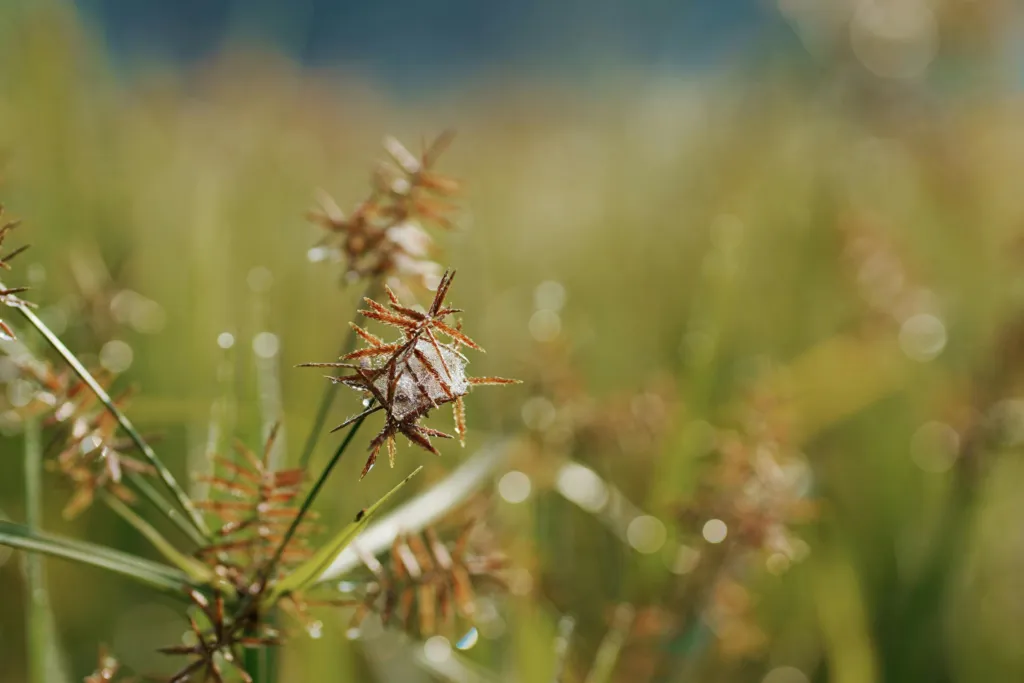
- Flower cluster: on mature plants, a spiky branching head at the top of the stem, shaped loosely like an open umbrella
In a Florida lawn, nutsedge creates an obviously uneven appearance. You’ll see patches of taller, differently colored growth that stand out.
Are You Dealing With Yellow or Purple Nutsedge?
Both species are common in Florida. They look similar, but their behavior and relative difficulty affect how you should approach treatment.
Yellow nutsedge
- More widespread variety across the U.S.
- Tends to be more responsive to correctly timed herbicide applications
- Emerges in early to mid-summer
- Reproduces primarily through nutlets that develop at the tips of its rhizomes
- Prefers wet, poorly drained soils
Purple nutsedge
- Harder to eliminate
- Rhizomes produce nutlets along the entire length of the underground stem
- Pulling it can scatter nutlets across a wider area and expand the infestation
- Typically emerges later in summer and is especially prevalent in Florida and other warm, humid states
- Professional-grade products are usually necessary to make real headway
Don’t confuse purple or yellow nutsedge with kyllinga. This similar-looking weed has a weaker root system and typically responds better to treatment. Not sure if it’s nutsedge or kyllinga? Get a professional to make the identification before you take any other steps.
Where Does Nutsedge Thrive in Florida?
Florida’s warm, humid climate gives nutsedge a longer active season than other parts of the country. Understanding the specific conditions it favors helps explain both where it appears in your lawn and what adjustments make long-term management easier.
Consistent soil moisture is the primary driver. Low-lying areas where water pools after rain, sections near downspouts or irrigation heads that stay perpetually damp, and soils with high clay content that drain slowly are all prime nutsedge territory.
Compacted soil is another contributing factor. Nutsedge tolerates compacted ground considerably better than most grasses in your lawn. So it takes over areas where turf is already struggling. For instance, spots that never seemed to grow well, thin patches along edges, and areas with heavy foot traffic.
The Florida timeline for nutsedge typically begins in late spring and runs through early fall. Growth peaks during the hottest summer months when it outpaces warm-season grasses like St. Augustine and Bermuda at their most stressed. The above-ground plant eventually dies back as temperatures drop toward winter. The nutlets stay right where they are.
Reasons Why Nutsedge Keeps Coming Back
The nutlet system is the short answer. That’s why patience and repetition are non-negotiable parts of any effective nutsedge program.
A nutlet can remain in the soil through conditions that kill the above-ground plant entirely (herbicide applications, frost, drought, physical removal of the shoot). When that dormancy ends depends on soil temperature, moisture, and other environmental cues that nutsedge reads with more sensitivity than we can predict.
A lawn that showed no nutsedge for an entire growing season after treatment can have new growth the following spring from nutlets that simply waited.
Root depth adds to the problem. Nutsedge root systems commonly extend 8 to 18 inches below the surface. Hand-pulling at soil level almost never reaches the nutlets. In fact, it often stimulates dormant nutlets in the surrounding soil to activate.
Spread also happens through multiple pathways at once: seeds, rhizomes extending laterally through the soil, and nutlets transported by foot traffic, equipment, or water movement across the lawn surface.
A weed that spreads this efficiently through this many mechanisms requires a deliberate, sustained response. Not a single application.
How to Get Nutsedge Under Control
No product eliminates nutsedge completely in one application. The goal is gradual population reduction. Here’s what that process looks like in practice:
Identify accurately. Confirm the triangular stem, the three-blade leaf arrangement, the rapid regrowth pattern. Also, determine whether you’re looking at yellow or purple nutsedge.
Stop pulling. The instinct to yank a weed out is natural…but almost entirely counterproductive with nutsedge. Pulling breaks the stem, leaves the nutlets, and frequently stimulates additional growth from surrounding dormant nutlets.
Apply a selective sedge herbicide. Standard broadleaf weed killers do not reach the underground tuber structures that sustain nutsedge. Products specifically formulated for sedge control are required. For Florida’s warm-season grasses(St. Augustine, Bermuda, Zoysia), verify label compatibility before applying. Halosulfuron-based and sulfentrazone-based formulations are among the most established options for these grass types.
Time the application to the growth stage. Late spring through early summer is the primary window. Young nutsedge plants (under five or six leaves) translocate herbicide down to the root system far more effectively than older, more established plants.
Give the application room to work. Avoid mowing for 48 hours before and after treatment. A second application 7 to 10 days after the first is standard for established infestations. One pass rarely handles the full population.
How Does Nutsedge Affect Florida Lawns Over Time?
A small cluster of nutsedge grows taller and more rapidly than warm-season turf grasses during summer. It competes for water, soil nutrients, and physical space in the root zone. By the time an infestation is large enough to be noticed, the problem is already weeks old
The cumulative effect is gradual but significant. Grass in infested areas thins out as nutsedge wins the battle for what it needs. Thinning turf creates open zones for more weeds. And because nutlets continue producing new growth, the process of recovery extends well beyond what a single summer of effort can accomplish.
What to Do to Help Stop Nutsedge
Water less often, but more deeply. Shifting to longer, less frequent watering cycles encourages grass roots to develop at depth and makes the upper soil layer less hospitable to germinating nutlets.
Correct drainage problems. Nutsedge loves low spots, damp areas, and sections of soil that drain slowly. Filling or regrading those zones removes an advantage the weed has been using.
Aerate annually. Compacted soil suppresses turf root development while nutsedge handles it comparatively well. Annual aeration loosens the soil profile and improves movement of water, air, and fertilizer to the root zone for your grass.
Invest in turf density. Thick, healthy lawn grass is the best structural competition against weed encroachment. Overseeding thin areas, maintaining a consistent fertilization program, and mowing at the appropriate height for your grass type helps make weed establishment harder.
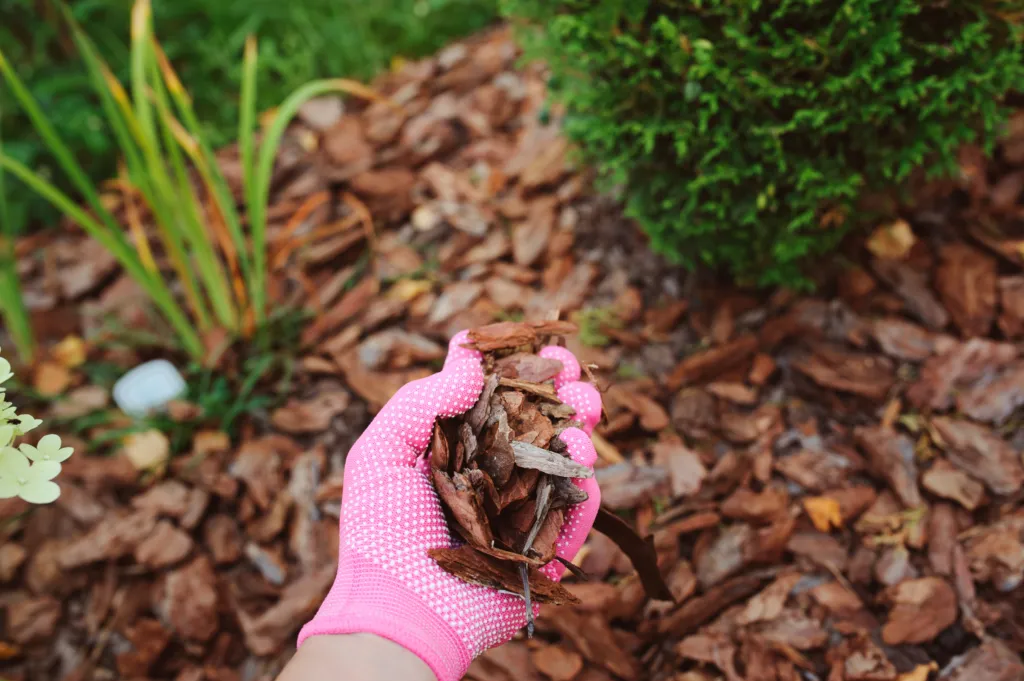
Apply mulch in non-turf areas. In landscape beds and around trees and shrubs, three to four inches of mulch suppresses nutsedge emergence.
Trust the Weed Control Pros at Luv-A-Lawn
For small or early-stage infestations where the identification is clear and the timing lines up, a well-executed DIY approach can work. But beyond that, off-the-shelf nutsedge programs don’t work well.
Professional programs offer commercial-grade selective herbicides and the experience to correctly identify the species, select the appropriate product, and structure a treatment schedule for your Florida yard.
If you’re ready to stop fighting nutsedge by yourself, reach out to the lawn care experts at Luv-A-Lawn! We proudly serve several Florida cities and the surrounding communities, ensuring high-quality lawn care and pest control services across the region: