
Discover All You Need to Know About These Flying Insects
You’ve probably seen mayflies before, but you may not have known what they were. Those winged insects that show up suddenly on every surface in sight? Mayflies. They don’t bite, sting, or transmit diseases, but they sure are annoying.
If you’re dealing with a swarm or just want to learn more about these flying spring bugs, keep reading! The pest control experts at Luv-A-Lawn are sharing an inside scoop on mayflies.
What Are Mayflies?
Scientifically speaking, mayflies fall under the insect order Ephemeroptera. But their name is the first thing that trips people up, because these aren’t actually flies. Dragonflies are a much closer match genetically than your average housefly or mosquito. You might also hear them called shadflies, lakeflies, or dayflies depending on your corner of the country.
Something that rarely comes up in conversation is just how ecologically valuable these bugs are, particularly here in Florida. Fish, birds, and bats all rely heavily on mayflies as a food source, and scientists actually use mayfly populations as a gauge of water health. A thriving mayfly presence usually points to clean, well-maintained water. So as maddening as a patio covered in them can be, there’s a silver lining hiding in that swarm.
What Do Mayflies Look Like?
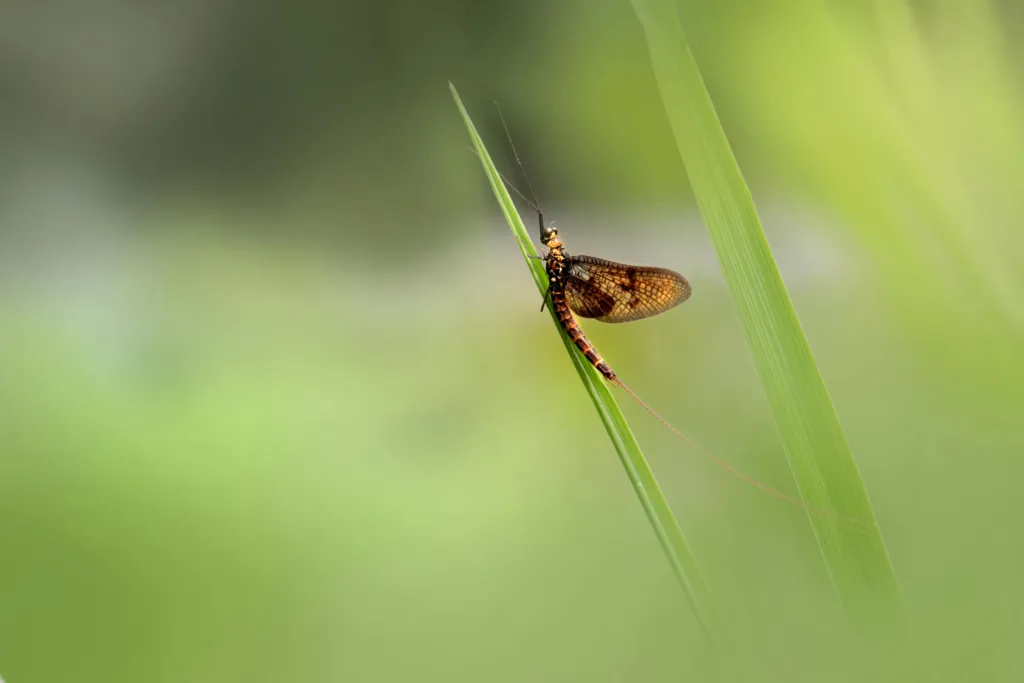
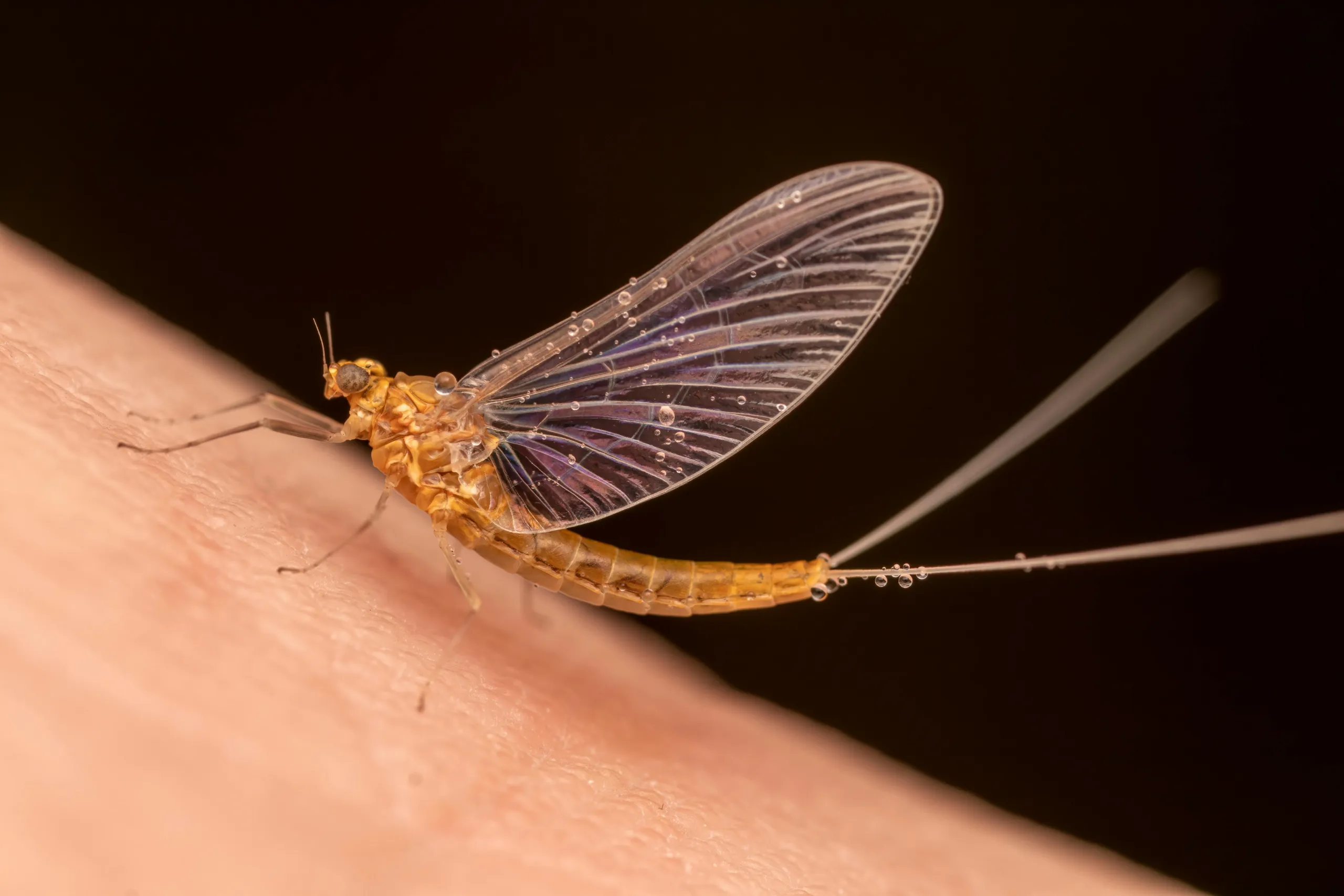
Spotting a mayfly gets easier once you know the telltale signs. The wings are the first thing to notice since they angle sharply upward in a peaked position rather than lying flat, almost like a tiny tent perched on the insect’s back. Those long, wispy threads extending from the rear end are the other dead giveaway.
Mosquitoes and crane flies tend to cause the most confusion. The differences are worth knowing:
- Mosquitoes carry a slender, piercing mouthpart called a proboscis, while mayflies have nothing comparable and can’t feed at all.
- Crane flies are considerably larger, with a lanky frame and wings that spread horizontally rather than pointing upward. Peaked wings combined with trailing tail threads almost always means you’re looking at a mayfly.
The immature nymph stage looks nothing like the adult. Nymphs are broader, darker, and carry visible gill structures along the sides of their abdomen. A few quick stats on adult mayflies:
- Size: roughly ¼ inch to just over 1 inch long
- Slender body with a long, tapered abdomen
- Two or three long tail filaments called cerci
- Four clear, veined wings held upright when at rest
- Large, prominent compound eyes
How Long Does a Mayfly Live?
It’s a short yet dramatic life for the mayfly, which takes part in two lopsided parts.
Larval (Nymph) Stage
Most people are genuinely surprised to learn that nearly the entire mayfly lifespan unfolds beneath the water’s surface. During the nymph phase, these insects take up residence in lakes, rivers, and streams for anywhere between several months and two full years. Throughout that time, they graze on algae, plant debris, and decomposing matter, shedding their outer layer repeatedly as they develop.
Adult Stage
Then comes the adult phase, and it goes fast. Twelve to 48 hours is the typical window, though a handful of species manage to push that slightly further under ideal circumstances. The moment a mayfly surfaces, it’s already racing against the clock. No feeding. No rest. Just a singular drive to reproduce before time runs out.
The short version: the underwater chapter of a mayfly’s life stretches on for months or years, while the winged stage you actually witness is over before most people’s weekends begin.
Should You Worry About Biting or Stinging?
Not even slightly. Biting and stinging simply aren’t possible for adult mayflies because they’re missing the equipment entirely. Their mouthparts are vestigial and useless, and their digestive systems contain air rather than anything functional.
There is no feeding mechanism, no venom, no threat. If something nipped you during what looked like a mayfly swarm, a mosquito or midge almost certainly deserves the blame. Those insects frequently share the same airspace, and in the middle of a thick swarm, it’s an easy mix-up to make.
Disease transmission is also off the table. Mayflies carry no pathogens and spread nothing. At worst, they’ll tangle in your hair or cake your driveway in a layer of insects that takes some serious hosing down to clear.
Where Do Mayflies Live in Florida?
Freshwater is the one constant in a mayfly’s world. Rivers, streams, lakes, and ponds all serve as habitat. And wherever mayflies are present in numbers, it’s generally a sign that the water quality is decent. Heavily degraded or polluted waterways tend to push mayfly populations out well before other warning signs emerge.
Once the adult stage begins, mayflies fly away from the water, but they don’t wander far. As weak fliers, they’re heavily influenced by light sources, which is why properties near bodies of water often end up hosting them in large numbers. Florida homeowners most commonly find them gathering around:
- Outdoor lights. Especially bright white bulbs or older mercury vapor fixtures
- Vehicles. The smooth surface appeals to them, and the mess they leave is unpleasant
- Siding and windows. They cling to vertical surfaces and are hard to miss at scale
- Docks, patios, and pool areas. Particularly at night during peak emergence
Mayfly Life Cycle & Why Swarms Happen
Mayfly eggs hatch into aquatic nymphs, which spend months or years underwater. When conditions are right, thousands of nymphs synchronize their emergence. They swim to the surface, shed their larval casing, and take flight as winged subadults.
Once fully adult, they swarm. Sometimes in huge numbers that look like storm clouds. Females can lay anywhere from 500 to 8,000 eggs on or just below the water surface, depending on species and body size. The eggs sink, settle on the bottom, and the cycle begins again.
The synchronized emergence is what creates the swarm effect. Combine calm air, warm temperatures, and a nearby light source, and you’ve got the scene that makes people call our pest control services.
Why Are There So Many Mayflies Some Years?
Population swings are normal. Natural cycles, water temperature, larval survival rates, clean water conditions, and weather patterns all affect how large a given year’s emergence will be. A mild winter followed by a warm, wet spring can produce massive hatches.
When Are Mayflies Most Active?
Broadly, late spring and summer represent the heart of mayfly season. However, your exact location shifts that window considerably.
- Florida: Warmer water through the winter and early spring pushes emergence ahead of schedule, with peak activity often arriving in April or May.
- Midwest and Great Lakes states: The heaviest swarms typically hit between late May and July, concentrated near major rivers and lakes. Communities along Lake Erie and Lake Michigan occasionally see emergence severe enough to warrant road closures.
- Northern states: The season arrives later and compresses into a shorter, more concentrated burst.
Evening conditions do a lot of the work here. Still air and mild temperatures are the combination that gets things moving. A cold front pushing through can shut emergence down almost instantly, but once temperatures climb back up and the wind settles, activity tends to pick right back up where it left off.
Are Mayflies Dangerous?
To your physical health, no. To your property, not in any structural sense. But writing them off as completely inconsequential would be a mistake.
The real issue is accumulation. Dead mayflies pile up at a surprising rate, and once they start decomposing, the smell is distinctly unpleasant. Beyond the odor, thick layers of carcasses on pavement, steps, or sidewalks create a genuine slip hazard. Leave the buildup unaddressed for too long and you’ll have a secondary problem on your hands: birds and bats showing up to feed on the remains, which brings its own set of complications.
The bottom line is that mayflies pose no direct danger, but a large-scale swarm can make outdoor spaces genuinely unpleasant until things settle down.
What Attracts Mayflies to Your Home?
- Proximity to water. Location is the defining factor. Properties sitting within roughly a mile of a lake, river, or pond during emergence season are squarely in the path of any nearby swarm.
- Reflective surfaces. Mayflies appear to interpret certain reflected light as water. A glossy car hood, a swimming pool, or polished exterior siding can all register as an inviting landing zone, pulling insects in even when actual water isn’t nearby.
- Calm, warm evenings. Emergence rarely happens under windy or cool conditions. When temperatures stay mild and the air goes still, those are the evenings when swarms materialize most reliably.
- Outdoor lighting. Bright white and blue-spectrum bulbs act almost like a beacon for mayflies. Switching to warmer-toned lighting won’t make your property invisible to them, but it removes one of the biggest draws available.
How to Get Rid of Mayflies
Honestly, he source of the problem is out of reach. Mayfly breeding happens entirely underwater across lakes and waterways that no residential treatment can touch. The strategy isn’t eradication. It’s reducing how much of the swarm ends up on your property and how quickly you can recover when it does.
Immediate Cleanup
Act fast once a swarm moves through. A broom, shop vac, or garden hose will handle most of the debris, and getting to it quickly keeps the odor manageable and prevents slippery buildup on walkways and driveways.
Light Management
Replacing bright white outdoor bulbs with yellow or amber LED alternatives takes away one of the strongest attractants available to mayflies. Pairing that change with motion-activated fixtures makes a meaningful dent in how many insects your property draws in. Angling fixtures downward also helps by reducing how far the light casts.
On the worst nights of a swarm, cutting outdoor lighting entirely is more effective than any other single step you can take.
Mayfly Prevention Tips
- Set up a fan on your patio or deck since mayflies struggle against even a mild, steady breeze
- Keep decorative ponds and water features in mind; they can attract egg-laying females during emergence season
- Check window and door screens for tears or gaps and patch anything that could let insects through
- Draw curtains or blinds on windows near exterior light sources once evening hits
Do Insecticides Work?
Rarely, and usually not worth the effort. The adult lifespan is simply too brief for pesticide applications to accomplish much. The swarm ends on its own before most treatments have a meaningful impact.
There’s also the matter of environmental responsibility. Spraying chemicals anywhere near water sources creates risks that aren’t justified by the results. For severe situations at commercial properties, a targeted application might occasionally make sense. For the average Florida homeowner, patience and light management will serve better than anything that comes in a spray can.
Is It a Mayfly or Something Else?
Mayflies vs. Crane Flies
Crane flies are the gangly, long-legged insects people often mistake for “giant mosquitoes.” They’re bigger than mayflies, their wings rest flat, and they lack the distinctive tail filaments. Both are harmless to humans, but crane flies can sometimes damage lawn roots in their larval stage.
Mayflies vs. Mosquitoes
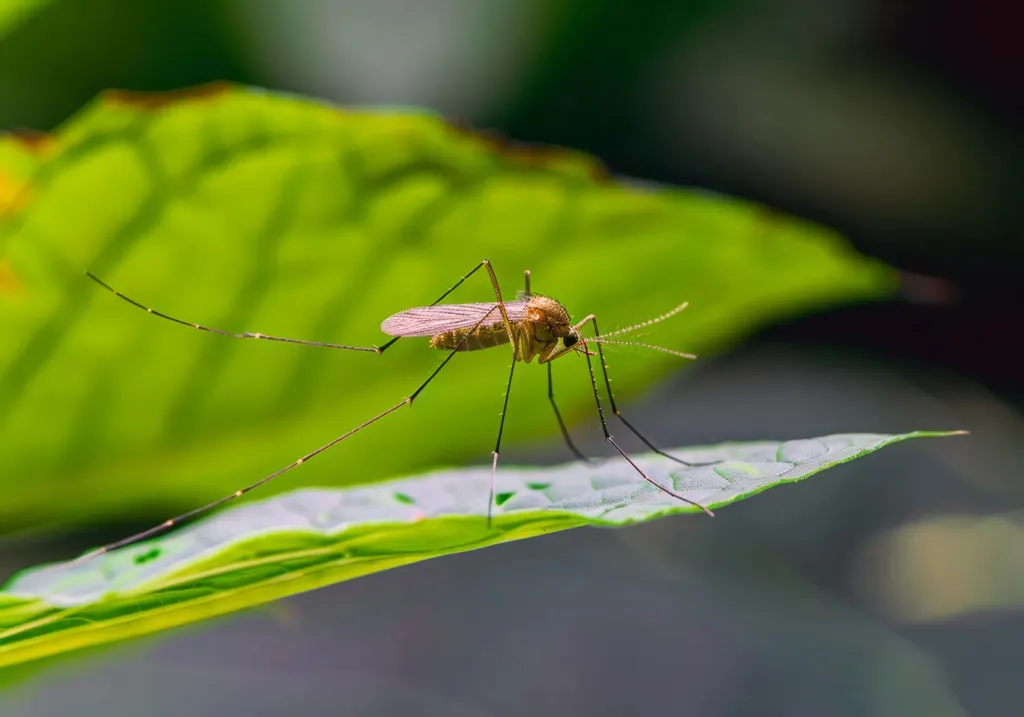
These two get confused constantly, especially during swarms. The key difference? Mosquitoes bite, mayflies don’t. That’s one of the reasons why mosquito control is necessary and mayfly control isn’t.
Mosquitoes also hold their wings flat against their bodies at rest, while mayflies hold theirs upright like tiny sails. Up close, mosquitoes have that telltale needle-like proboscis. Mayflies have nothing of the sort.
Mayflies vs. Midges
Midges are tiny, often swarm near water, and are frequently the actual culprit when people report “mayfly bites.” Some midge species do bite. If you’re getting welts during what looks like a mayfly swarm, midges are the more likely suspect.
Will Pest Control Professionals Help?
For most homeowners, mayfly swarms are a brief, annual inconvenience that resolves itself within a couple of days. But there are situations where professional help makes sense:
- Recurring severe swarms affecting quality of life year after year, with no improvement from DIY management
- Commercial properties where insect buildup creates safety hazards (parking lots, walkways, storefronts)
- If you’re uncertain about whether you’re dealing with mayflies or disease-carrying mosquitoes, a professional ID is absolutely worth it
Pest control professionals at Luv-A-Lawn can also assess whether there are other contributing factors and advise on integrated approaches for your specific situation.
Mayfly FAQs
-
Do mayflies damage lawns or plants?
No. Adult mayflies can’t feed at all.
-
How long will a mayfly swarm last?
Peak emergence typically lasts one to three days, sometimes up to a week if multiple species are hatching in sequence.
-
Are mayflies a sign of dirty water?
Actually, the opposite. Mayfly populations are sensitive to water quality and tend to thrive in cleaner water.
-
Why are mayflies attracted to light?
They use natural light sources to orient themselves. Artificial lights disrupt this navigation, drawing them in.
-
Can mayflies infest my house?
Not really. They don’t breed indoors, don’t eat anything inside your home, and die quickly.
Seeing Pests Around? Call Us ASAP
Mayflies can be really annoying, especially when they’re flying around your face or stinking up your property. There are several practical steps to help solve the issue, such as switching to warm-toned outdoor lighting, cleaning up quickly, and knowing that the swarm will end in a day or two without any intervention.
Whether you’re dealing with mayflies, mosquitoes, or other lawn pests, Luv-A-Lawn can help you develop a seasonal pest management plan tailored to your property and location. We proudly serve several Florida cities and the surrounding communities, ensuring high-quality lawn care and pest control services across the region: