
Prevent & Protect Against Ants in Central Florida
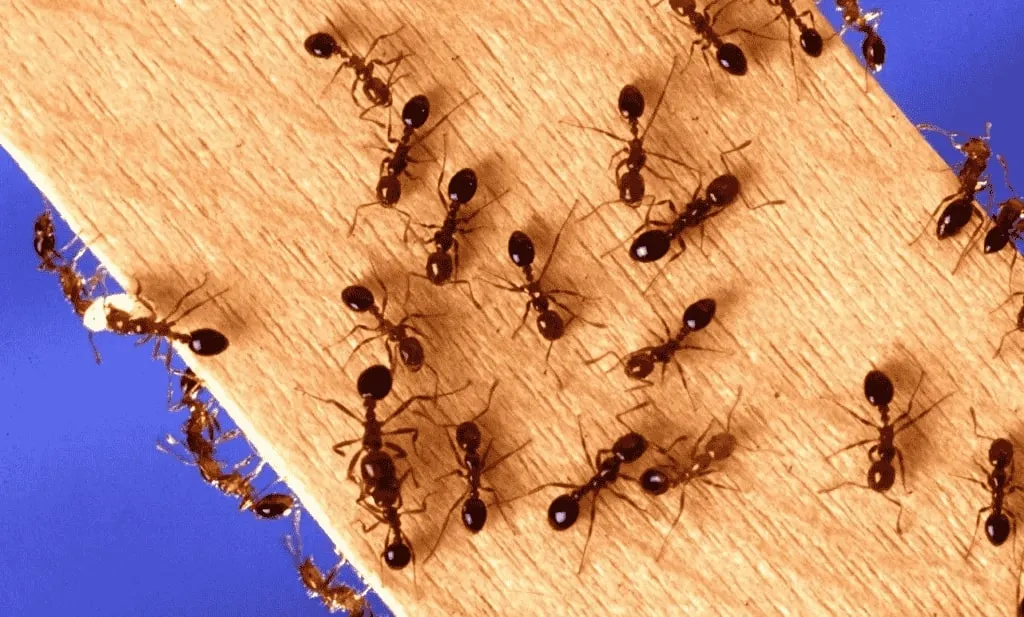
Most homeowners discover they have an ant problem when it’s too late. Maybe you spray and move on. Unfortunately, the ants you’ve killed are the replaceable workers. The colony could still be thriving somewhere out of sight. So how do you get rid of ants in Central FL?
Effective ant control requires working backward. The lawn care and pest control professionals at Luv-A-Lawn have broken down that process into six simple steps. Permanent eradication is the dream, but sustainable, long-term control should be the achievable goal instead.
Know Your Enemy
Ant control is not one-size-fits-all. Common types of ants nest in different places, are attracted to distinct baits, and should be treated in unique ways.
Food preferences vary by species, too. Some ants are after sugars while others prefer fats and proteins. Colony location differs as well. Some kinds of ants nest exclusively outdoors, but others build permanent nests inside wall voids or beneath flooring.
First? Confirm it’s actually an ant
Ants and termites are often confused. The distinguishing features are the waist and antennae. Ants have a pinched, narrow waist between the thorax and abdomen and bent, L-shaped antennae. Termites have a broad, tube-like midsection with no narrowing and straight antennae that look almost like a string of dots.
Once you’ve confirmed you’re dealing with ants, narrowing down the species is next. Body size, color, foraging pattern, odor when crushed, and nesting location all provide clues.
Here are some warning signs worth paying attention to:
- Food packaging that has been contaminated
- Winged ants swarming indoors or around the exterior of the home
- Defined trails moving along walls, countertops, or baseboards
- Repeated ant activity in food storage or preparation areas
- Exterior mounds near the foundation or throughout the yard
- Frass (fine, brownish material resembling sawdust) points toward carpenter ant tunneling
These signs shouldn’t be left unaddressed. Carpenter ants and fire ants are especially big threats. However, any species left unchecked will just keep expanding.
Find where they’re coming from
Colony size can span an enormous range, from a modest few hundred individuals to several hundred thousand. Nest locations can be underground, inside mulch beds, beneath concrete, behind wall panels, in rotting landscape wood, or anywhere that offers shelter and moisture.
And behavior shifts seasonally. As winter ends, colonies emerge from dormancy and foraging activity spikes sharply. Midsummer represents peak population. Autumn prompts a move toward warmth, which often means indoor pressure increases. Plus, unusual weather can trigger rapid movement as colonies respond to changes in their immediate environment.
Cut Off Their Resources
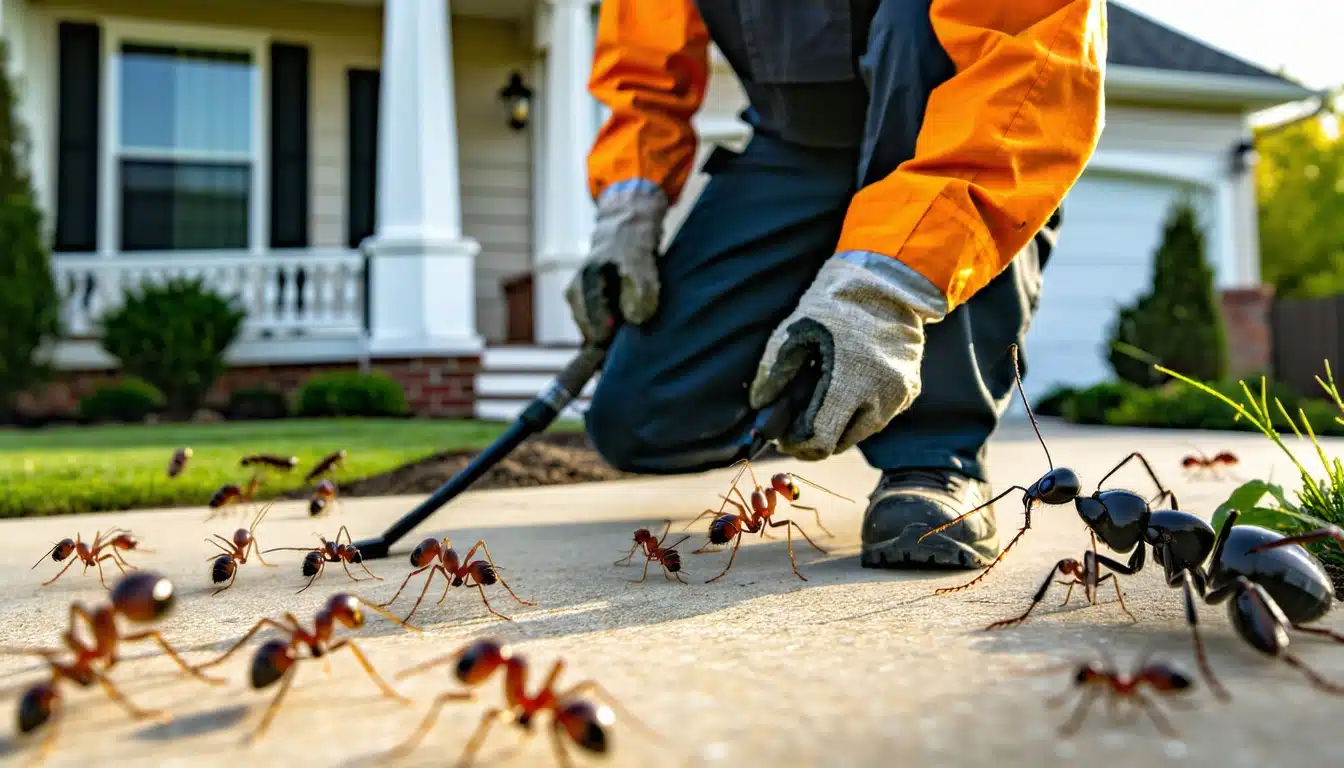
Ants enter your home for food, water, or both. As they go, they leave a chemical trail behind for others to follow. Removing that disrupts the entire supply chain.
Food storage habits matter more than most people realize. Dry goods left in their original packaging are easy targets. Transferring them to sealed containers removes the temptation.
Crumbs and spills that sit even briefly become food sources. Dishes left in the sink overnight are an open invitation. Trash cans without secure lids are worth reconsidering.
Moisture deserves equal attention. Ants require water, and a slow plumbing leak can sustain a colony’s water needs indefinitely without anyone noticing. Inspect beneath sinks, around toilet bases, near washing machines and dishwashers, and anywhere condensation collects. Repair any leaks you find.
Disrupt the Pheromone Trail
Every ant foraging route is a communication channel. Workers deposit pheromone markers as they travel, creating a chemical road map that guides other colony members directly to the food source.
Disrupting it is surprisingly simple. Wipe down any surface where you’ve seen trails with a diluted vinegar solution, warm soapy water, or glass cleaner. All of these remove the pheromone layer, leaving returning workers with nothing to follow.
However, this step doesn’t affect the entire colony. Workers will re-establish routes as long as the source exists and the colony remains intact. Trail disruption is most useful as preparation. You should next introduce bait, so workers encounter it without the pull of an existing competing trail.
Strike at the Colony Directly
Contact sprays are satisfying to use and seemingly effective, but they only reach the visible workers. The ant colony isn’t exposed, so the queen keeps reproducing and replacement workers appear within days.
Plus, repellent sprays broadcast a chemical warning that certain areas are unsafe. Some species respond by rerouting workers. Even worse? Others, like pharaoh ants, respond by splitting into satellite colonies. Either way, the outcome often ends up worse than before the spray was applied.
Bait reaches where sprays can’t
Bait is engineered around the ant’s own behavior. Workers pick it up on their foraging routes, carry it back to the nest, and distribute it through normal feeding and grooming interactions.
The queen, larvae, and reproductive members all receive exposure. The slow-acting nature of the active ingredient is intentional. The colony needs time to spread the bait before any alarm response kicks in. The result is colony-level impact rather than surface-level control.
Getting placement right:
- An initial increase in ant activity around bait is normal and expected
- Keep bait stocked and accessible for two to four weeks
- Stations go directly on or immediately adjacent to active trails, not in nearby areas where you hope ants will find them
- Never apply repellent spray within several feet of a bait station
Let’s Take This Outside
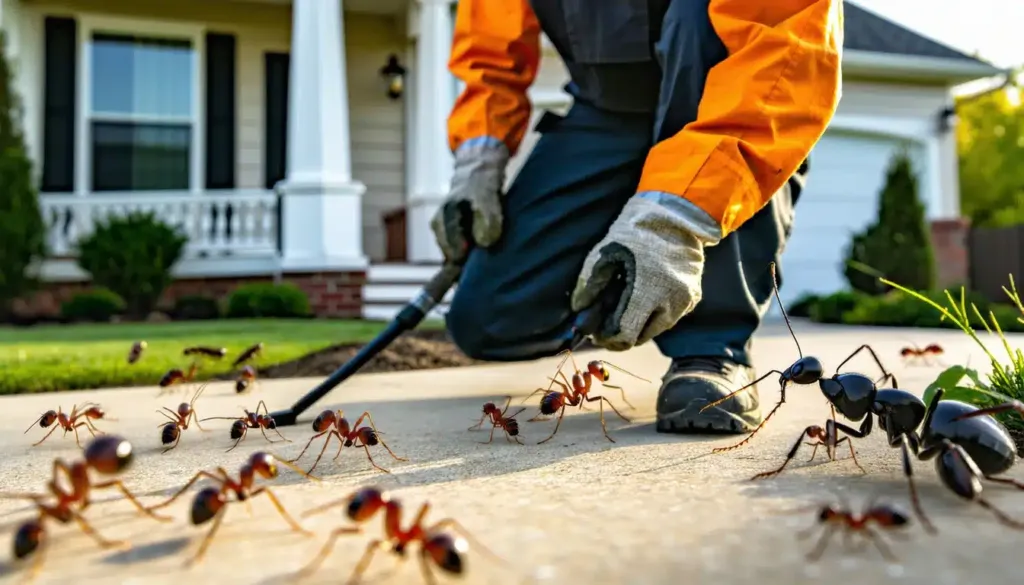
Indoor ant treatment by itself is a temporary measure. If the colony is living in your yard, workers will keep entering the structure until the outdoor source is addressed. You can seal, spray, and bait inside indefinitely and still lose ground if the exterior is untreated.
Productive places to inspect:
Around potted plants and flower containers sitting on soil
Expansion joints and cracks in driveways, patios, and sidewalks
Soil and mulch along the foundation, especially where mulch contacts siding
Under flat rocks, stepping stones, and stacked landscape materials
Firewood storage areas and decaying stumps
Reverse-tracing active trails (following them away from the house rather than toward it) frequently leads to the nest entrance. Granular bait scattered along foraging routes and near nest sites works well in outdoor settings.
For perimeter treatment, non-repellent products let ants pass through the barrier and carry the active ingredient back to the colony. Repellent treatments simply push ants around the treated zone rather than eliminating them.
Just be sure to maintain a clear buffer along the foundation. Pulling mulch, soil, and dense vegetation back from the wall face by several inches removes shelter and nesting habitat and makes monitoring much easier.
Block the Routes Back In
Treating the colony is essential. Making sure new colonies can’t repeat the process is equally important. Entry point sealing is the step that converts short-term control into something that holds.
Trace active trails back to their point of entry. These often include:
- Foundation cracks and gaps at siding transitions
- Soffit openings, crawlspace vents, and areas around exhaust fans
- Gaps around door and window frames, including worn threshold seals
- Spaces where baseboards pull away from walls or floors
- Penetrations where plumbing and utility lines enter the home
To-do list:
- Silicone caulk handles most gaps effectively
- Replace weatherstripping that has compressed or cracked
- Patch screen tears
- If you suspect carpenter ants, probe nearby wood carefully
- Keep branches from touching the roofline or siding
- Get firewood away from the foundation
- Remove any mulch or topsoil piled against siding
Natural Control Methods
Borax bait is the natural method with genuine colony-level potential. Combined with sugar water at a low concentration (or peanut butter for protein-feeding species), borax functions much like commercial bait. Remove competing food sources to maximize uptake, and keep the mixture well out of reach of children and pets.
Diatomaceous earth (food-grade) mechanically disrupts the exoskeleton of ants that contact it, causing them to dehydrate. It works as a dry barrier near entry zones but becomes useless when wet and shouldn’t be relied on as a standalone solution.
Vinegar, essential oils, and soap sprays provide surface-level disruption. None of these have any effect on the colony, so they belong in a supporting role rather than as primary tools for how to get rid of ants.
Is Complete Ant Extermination Possible?
Sadly, total and permanent elimination isn’t realistic. There will always be pressure from neighboring properties and new colony establishment each season. But sustained, manageable control is absolutely achievable.
The framework for maintaining it includes preventive baiting each spring before colonies reach full activity, consistent perimeter treatments through the warmer months, ongoing sanitation and sealing habits, and prompt action when early signs of activity appear.
When Your Treatment Plan Isn’t Working
Bait is being consumed but the infestation continues. Multiple colonies or untreated outdoor sources are the most likely explanations. Extend the treatment window and investigate the exterior more thoroughly.
Bait stations are being ignored. Competing food sources nearby are more appealing than the bait. Clear the area, reposition stations directly onto the active trail, and consider whether the formulation is right for the species.
Sprayed the area and ants are now showing up in new places. The colony scattered or budded in response to the repellent. Discontinue spraying near trails, wipe surfaces to reset pheromone signals, and start the treatment over with bait and outdoor application.
Ants appearing throughout multiple rooms. Likely indicates more than one entry point, an interior wall void colony, a moisture issue sustaining ants somewhere inside the structure, or outdoor vegetation providing direct access to the home.
If your DIY efforts aren’t working, it may be time to call in the pros at Luv-A-Lawn. Other signs that expert pest control is required? Carpenter ants anywhere near structural wood or fire ant colonies in yards where children or pets spend significant time. Also, recurring infestations that reset annually, ants nesting inside walls, or situations where every reasonable approach has been tried without meaningful results.
Our pest control team has the experience and professional-grade tools to locate the source and design a treatment plan that works!
Quick Ant FAQs
-
Are spring ant problems worse than other seasons?
Typically, yes. Post-dormancy foraging is intense, and colonies are actively growing and expanding.
-
What kills the whole colony?
Slow-acting bait that workers carry back and share throughout the nest. It’s the only approach that reaches the queen and reproductive members consistently.
-
How quickly does bait work?
One to three weeks is the typical window for meaningful population reduction, depending on colony size and species.
-
Can ants damage the structure of my home?
Carpenter ants can cause significant wood damage over time. Most other species won’t damage the structure, but food contamination and colony expansion are serious enough concerns on their own.
-
Why does the problem keep coming back?
The most common reasons: an outdoor colony was never treated, entry points were never sealed, or seasonal pressure from neighboring colonies is causing annual reinvasion.
-
Do natural treatments actually work?
For temporary trail disruption and entry point deterrence, yes. For eliminating a colony, no.
-
Will bait stations bring more ants in?
Initially, yes. Worker traffic to the bait station is what gets the product into the colony.
-
What provides the fastest results?
Contact spray for immediate surface control; bait paired with outdoor perimeter treatment for results that actually last.
Keep Ants Away from Your Home in Central Florida!
The steps we listed will work… but only when they’re followed in sequence and none are skipped. Identify the species, eliminate attractants, clear the trails, bait the colony, treat the exterior, seal the entry points.
If you’d rather trust the local professionals to fight ants and other lawn pests, reach out to Luv-A-Lawn! We proudly serve several Florida cities and the surrounding communities, ensuring high-quality lawn care and pest control services across the region: