
Learn the Best Options for Mulching Florida Yards
In This Article:
- Mulch is any material (bark, straw, gravel, shredded leaves, or grass clippings) spread over bare soil to protect and benefit it.
- It retains moisture, suppresses weeds, insulates roots against heat and cold, and gives garden beds a finished appearance.
- Organic mulch (bark, pine needles, straw) breaks down over time and feeds the soil, while inorganic mulch (stone, rubber, landscape fabric) lasts longer but adds nothing nutritionally.
- Why garden beds need two to three inches of mulch and not more or less than that.
- Achieve a beautiful property from top to bottom with help from the lawn care and pest control experts at Luv-A-Lawn.
What Is Mulch?
Any material spread over bare soil to protect and improve it. That covers more ground than most people expect. For instance, bark chips, pine needles, shredded leaves, straw, gravel, rubber, landscape fabric, and grass clippings.
Mulch also tends to make a yard look more finished. A clean, consistent layer around beds and trees has that cared-for quality that bare dirt lacks. But the appearance is really a side effect. The functional work of moisture retention, root protection, and weed control is what makes mulch actually worth it.
Garden Bed Mulching vs. Lawn Mulching
The word “mulching” gets used to describe two different processes.
In garden beds, mulching means spreading material like bark, leaves, straw, gravel over the soil around plants. The goal is to cover and protect exposed ground, moderate the soil environment, and reduce the maintenance burden that comes with bare dirt.
On the lawn, mulching means that instead of bagging grass clippings or throwing them out the side of the mower, you finely cut them and let them fall back into the turf. The clippings disappear between grass blades within a day or two, breaking down into the soil and returning nutrients in the process.
Mulch vs. Compost
These two get confused often. Mulch sits on top of the soil. Its work happens at the surface, protecting and conserving what’s underneath. Compost gets incorporated into the soil, where it delivers nutrients directly to plant roots.
Organic mulch does eventually decompose and contribute something to the soil below it, but that’s a gradual bonus, not its main job. One doesn’t replace the other.
The Problems Mulch Solves
The best way to understand what mulch does is to think about what happens without it. Exposed soil in a Florida summer loses moisture fast and gives weeds a chance to grow. Mulch helps with all of that.
Moisture loss. In a climate where the sun and heat are relentless for months at a time, anything that slows evaporation from the soil surface extends the time between waterings.
Weed pressure. Cover the soil and you block the sunlight that weed seeds need to germinate. A two-to-four-inch layer won’t stop every weed that tries, but it reduces the number that succeed.
Heat and temperature swings. Mulch insulates the soil, buffering roots against both summer heat and the occasional cold snap Central Florida gets.
Erosion and soil splash. Water hitting bare soil washes away nutrients, disturbs roots, and splashes soil-borne disease up onto the lower leaves of plants. A mulch layer absorbs that impact before it does damage.
Root vulnerability. Surface roots are susceptible to compaction and to contact with contaminated soil. A consistent mulch layer keeps that zone stable.
Organic or Inorganic Mulch?
Organic Mulch
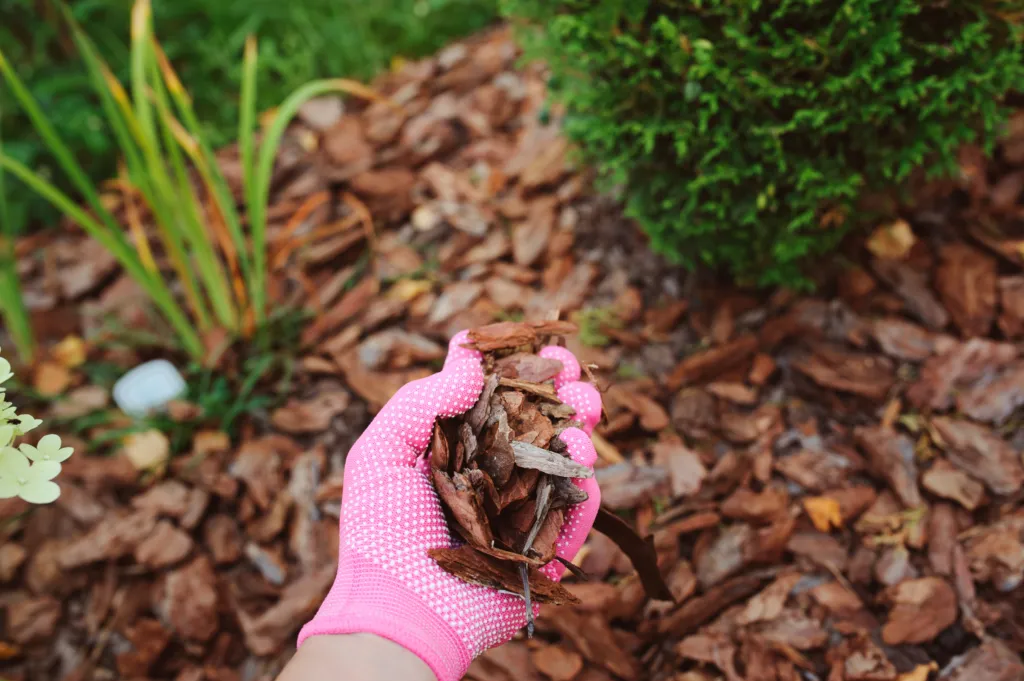
Bark, wood chips, pine needles, shredded leaves, straw, hay, grass clippings, and even layered newspaper come from plant material and will eventually break down. That decomposition is both the limitation and the advantage. It means periodic replenishment, but it also means the material gradually feeds the soil beneath it.
For vegetable gardens, flower beds, and any planting area where long-term soil health matters, organic mulch is almost always the stronger choice. In Florida, where sandy soils drain quickly and can be nutrient-poor, that slow return of organic matter is genuinely valuable.
Inorganic Mulch
Gravel, stone, rubber chips, plastic sheeting, and landscape fabric are materials that decompose slowly or not at all. They’re low-maintenance and effective at blocking weeds and retaining moisture, but they give nothing back to the soil over time.
Inorganic mulch makes sense around foundations, trees, and plants that prefer drier or rockier conditions. Once it’s installed, removal is a real project. Be deliberate about where you put it.
Common Kinds of Mulch
Bark and wood chips
Reliable around trees, shrubs, and foundation plantings, especially in beds that don’t need frequent replanting. Coarser material lasts longer in Florida’s heat but can make digging difficult if you need to add plants later.
Pine needles
It resists compaction, holds moisture well, and allows water to pass through easily. Pine needles may slightly lower soil pH over time, but the effect is usually mild.
Shredded leaves
Free every season and beneficial for vegetable and woodland gardens. Earthworms are drawn to decomposing leaves, which accelerates the soil-building process.
Plastic and landscape fabric
Work well for blocking weeds and retaining moisture around foundation plantings and shrubs.
Gravel and stone
A good fit for rain gardens, drought-tolerant plantings, and spots that benefit from extra drainage or heat retention.
Grass clippings
Best suited for lawns, compost piles, or out-of-the-way garden corners where quick nutrient return is the priority. Keep layers thin.
Straw and hay
Practical for vegetable gardens and paths. They reduce splash of soil and disease onto lower foliage and hold up long enough to last a growing season without constant replenishment.
Newspaper
Several sheets layered and moistened, then covered with another organic mulch, creates an effective weed barrier that breaks down naturally. Avoid glossy or heavily colored pages.
Lawn Mulching: Why Florida Homeowners Should Do It
Leaving grass clippings on the lawn is one of the best things you can do for warm-season turf.
Those clippings contain nitrogen, potassium, and other nutrients. When they decompose into the root zone, they feed the grass directly. Over a full growing season, that adds up. So does the time saved by not bagging and disposing of clippings.
What consistent lawn mulching does over time:
- Slows evaporation at the surface, extending the interval between watering sessions
- Supports denser, healthier turf that crowds out weeds more effectively than sparse grass
- Builds more fertile, biologically active soil as organic material accumulates and breaks down
- Keeps the root zone cooler during summer heat and more insulated during cooler months
- Leaves the lawn looking tidy
Getting It Right
- Mow once or twice a week during active growing seasons so clippings stay light and manageable
- Never remove more than a third of the grass height in one pass
- Mulch only when the grass is dry
- Use a mower with a mulching function, or install a conversion kit (a mulching blade plus a discharge plug) on your existing equipment
- Keep blades sharp and the deck clean for even distribution
If clumps are visible on the surface after mowing, the grass was likely too wet, too tall, or cut too quickly.
Getting Application & Timing Right
How to Apply Mulch in Garden Beds
Start by clearing the area. Two to three inches is the target depth. Less than that and the benefits are limited. More and you risk blocking air and water from reaching the roots.
Keep mulch a few inches away from tree trunks and plant stems. Piling it against bark traps moisture and creates conditions that favor rot and disease.
Finally, leave occasional patches of bare soil. Ground-nesting bees depend on exposed ground, and plants that spread by reseeding won’t be able to if every inch of soil is covered.
When to Apply Mulch in Florida?
For garden beds, late winter through early spring is the ideal window. A second application in early fall helps protect the soil through the drier months and keeps beds looking fresh.
For lawns, Florida’s warm-season grasses allow for mulching most of the year. Mid-spring through summer is when it matters most. That’s when grass is growing the most. Ease up as growth slows in cooler months, and switch back to conventional mowing when the lawn is consistently damp or growing unevenly.
When to Skip Mulching
Wet or shaded lawns. Florida humidity can keep certain areas perpetually damp. Clippings from those conditions stick together, clog mower decks, and pile up in clumps that block light and airflow.
Overgrown grass. Too much clipping volume at once creates a thick mat that smothers rather than feeds the turf.
Irregular mowing. Mulching depends on frequency. Skip sessions and clippings become too long and heavy to break down cleanly.
Newly established or struggling lawns. Give young turf time to develop before mulching. And never mulch moss.
Quick Answers to Common Mulch Questions
-
Is mulch necessary in every garden?
No. Some plants and soil conditions do better with exposed ground.
-
Does lawn mulching cause thatch?
Rarely, and not from clippings. Thatch builds from dead roots and stems, not from finely cut grass that breaks down quickly.
-
Can leaves be mulched into the lawn?
Light, dry leaves can be cut into the turf without issue.
-
Does mulching spread weeds?
Consistent mowing cuts most weeds before they flower and seed.
-
How much mulch do I actually need?
Two to three inches for garden beds. A thin, barely visible layer for lawn clippings.
Get Your Florida Lawn Looking Its Best
Mulch is a small investment with big returns. You’ll need to use less water, pull fewer weeds, have healthier roots, and achieve a beautiful yard. In Florida’s climate, where soil dries fast and weeds grow year-round, getting mulch right is one of the most practical things a homeowner can do.
Want to enjoy your spare time instead of doing yard work? Reach out to the lawn care and pest control experts at Luv-A-Lawn! We proudly serve several Florida cities and the surrounding communities, ensuring high-quality services across the region: