
Expert Advice on Feeding Your Soil with Mulched Foliage
What You’ll Read About:
- Florida’s leaf season doesn’t follow the calendar most lawn guides assume
- Mulching means mowing over fallen leaves and leaving the shredded fragments on the lawn
- The soil benefits are reduced fertilizer demand, improved drainage, suppressed weed germination, and a more biologically active root zone
- Dry leaves, consistent frequency, and the right stopping point matter more than any specialized equipment
- Florida’s humidity and dominant tree species create a few local considerations that generic mulching guides overlook
- Luv-A-Lawn provides year-round lawn care and pest control to St. Cloud, Kissimmee, North Orlando, and Rockledge, FL
Florida’s Leaf Season Isn’t What Most Guides Describe
Florida’s fall and leaf-dropping season is different from what others experience further north. We have relatively few fully deciduous tree species. The most common large canopy trees, like live oaks, are semi-deciduous.
Instead of dropping their leaves in autumn, these trees hold most of their foliage through winter and shed it in late winter or early spring. For many homeowners in St. Cloud, Kissimmee, and the greater Orlando area, the most significant leaf management work of the year happens early in the year.
Sweetgums and certain maple species behave more like northern trees, with a fall drop in October and November. But their contribution to the overall leaf volume in most Central Florida yards is modest.
At the end of the day, knowing which trees are doing the dropping and when helps with your timing and how often to mulch. At least, more so than any seasonal calendar.
What Is Mulching & Why Is It Worthwhile?
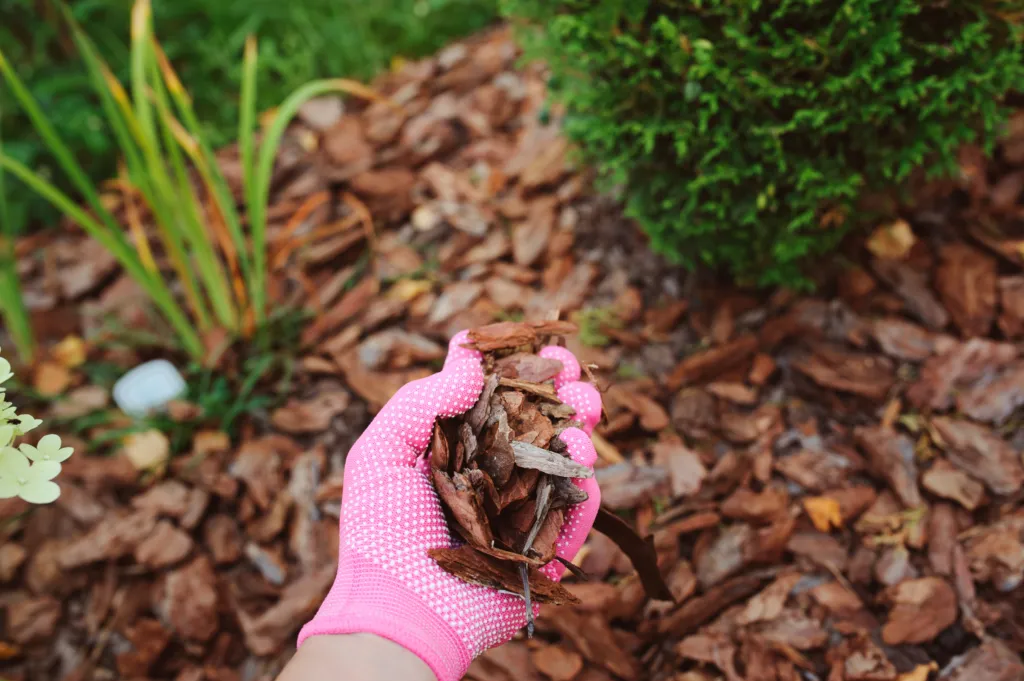
First off, you should understand the answer to the question: “What is mulch?” As far as mulching leaves, you simply drive a mower over fallen leaves, the blade chops them into small fragments, and those fragments filter back down through the grass canopy to the soil surface.
A standard mower with a sharp blade does the job. A dedicated mulching blade is even better, but not a requirement.
Here’s what you’re getting in return for skipping the raking:
- Nutrient return. As shredded leaves decompose, they release nitrogen, phosphorus, and potassium directly into the root zone. These are the same three primary nutrients in bagged fertilizer. Lawns that receive consistent leaf mulching through Florida’s long growing season typically need less supplemental fertilizer to maintain the same quality.
- Soil biology. Decomposing organic material is food for earthworms, beneficial fungi, and diverse microbial populations. As those communities grow and process the material, they open up space in the soil. This improves water infiltration, air movement, and root development.
- Weed suppression. A thin layer of decomposing material limits light exposure to weed seeds at the soil surface. Most common Florida lawn weeds (dollarweed, chamberbitter, and certain annual grasses) require light to germinate. Mulching doesn’t replace a pre-emergent weed control program, but it definitely helps.
- Environmental benefit. Yard waste bagged for the landfill generates methane. Material that breaks down on-site doesn’t produce that methane, and it keeps phosphorus out of storm drains.
Florida Factors to Take Into Account
Two things about Central Florida’s conditions distinguish mulching here from the way it works in drier or cooler climates.
Humidity. Most mulching guides assume that fallen leaves are workable most of the time. In Florida, that’s not always the case. Our humidity and regular afternoon rain keep leaf material damp.
Wet leaves don’t fragment cleanly. They clump under the deck, clog the discharge, and produce matted chunks that sit on the turf surface. The single most effective habit for better mulching results in Florida is timing sessions to dry afternoons after a stretch without rain.
Tree species. The trees doing most of the dropping across Central Florida produce different material with different mulching characteristics:
- Florida live oak: Small, leathery leaves with a waxy surface coating. They shred more reluctantly than softer leaves and decompose slowly. In heavy drop years or yards with multiple mature oaks, plan on two passes.
- Sweetgum: Larger star-shaped leaves that shred readily and break down at a faster rate. Single-pass mulching typically handles them well during moderate drop periods.
- Water oak and willow oak: Thin, relatively small leaves that fragment efficiently. These are among the easier species to mulch in a single pass.
- Sabal palm: Fronds belong in a different category entirely. They don’t shred effectively with a standard mower blade and should be removed rather than run over.
Yards with a mix of species will see variable results from session to session, so be sure to pay attention to what’s actually on your yard
When to Mulch vs. When to Rake
As a general rule, you can mulch when you have light to moderate coverage of dry leaves over an established lawn. However, step up your approach when conditions change:
- If leaves are accumulating faster than you can mow weekly, mulch what you can and rake the rest to beds or compost.
- When you’re facing more than 4–6 inches of loose leaf accumulation, rake first, then mulch the remainder.
- If leaves show visible disease (such as leaf spot or tar spot), or if your lawn has a documented fungal disease history, rake and remove them entirely.
- On properties that drain toward water, rake and keep leaves well away from drainage paths to prevent nutrient runoff and clogging.
- For newly seeded areas or recently installed sod, always rake.
- After recent rain, wait for dry conditions before mulching, since wet leaves clump and smother rather than shred.
The half-grass-visible rule is the most useful field test. After a mulching pass, you should be able to see roughly half the lawn surface beneath the shredded fragments.
If the lawn is still mostly obscured after the mower goes over it, the volume is too high for that session. It’s probably time to switch to raking or bagging.
Steps for the Best Mulching Technique
- Read the conditions first. Dry leaves, dry turf, calm afternoon. If rain has passed through in the last day or two and leaves are still clumped and damp, waiting produces better results. In Florida’s climate, dry windows are worth protecting.
- Set the mower at your standard fall cutting height. Lowering the blade to chop leaves more aggressively does more harm to the turf than good for the leaves. St. Augustine, Bermuda, Zoysia, and centipede grass all have appropriate seasonal cutting heights that should be maintained regardless of what’s on the lawn surface.
- Take off the grass catcher. The goal is returning shredded material to the lawn. A collection bag catches exactly what you want left behind.
- Slow your pace. More blade contact time per square foot produces finer fragments. At normal mowing speed, light leaf coverage shreds adequately. Anything heavier than light benefits from slowing down.
- Check your work. After the first pass, the fragments should be roughly dime-sized or smaller, with visible grass beneath them. If the surface is still mostly covered or pieces are too coarse, run a second pass perpendicular to the first.
- Know when to stop. If the lawn is still smothered after two passes, additional mowing won’t improve it. Rake the excess into garden beds as surface mulch or start a compost pile.
Mulch Consistently
Too much time between sessions makes mulching so much more difficult. And less effective. A light layer that would take five minutes to process in a single pass becomes a difficult multi-step project.
For most Central Florida yards, a once-weekly pass through the primary leaf-drop period is enough to stay ahead of the problem. Yards with heavy live oak canopy may need twice-weekly passes during peak drop.
A Florida-specific note: The “before the first frost” advice that closes most northern mulching guides doesn’t really work here because hard frosts are rare and brief.
The more useful seasonal checkpoint is the cooler, wetter stretch between roughly December and February. Making sure accumulated leaf material isn’t sitting matted against the soil surface during that window reduces fungal risk without requiring a frost deadline to drive the decision.
For yards where the major drop happens in late winter or early spring, the same approach applies on a shifted calendar. Consistent weekly passes in February and March, followed by one final assessment once the drop slows, covers the season for those trees as effectively as a fall schedule covers sweetgums.
What to Do If You Have Mulching Issues
Does the lawn look flattened or matted after a mulching session? The cause is almost always volume. There was more material than the mower could process into fine fragments in a single pass.
Rake out the thickest patches by hand, run future sessions on a shorter interval, and try mulching at a slightly higher blade height to prevent material from being pressed down.
Is the mower clogging or slowing down mid-pass? You probably have wet material, too much depth, or both. Wet material? Pause and let conditions dry before resuming. Too much depth? Use a leaf blower to spread the pile more thinly before the mower goes over it.
Is there a visible mat after two full passes? Waxy, dense leaves resist shredding more than softer species. Try one additional pass at a third angle. If the mat persists, rake the remainder into beds rather than continuing to run the mower over it.
Florida Mulching FAQs
Get Your Lawn the Love It Needs!
Mulching is one part of the seasonal management routine that keeps Central Florida lawns healthy through the year. Your yard also needs pre-emergent weed control, irrigation service, ongoing pest monitoring, and more!
If coordinating all of that is more than you want to manage yourself, reach out to the lawn care experts at Luv-A-Lawn! We proudly serve several Florida cities and the surrounding communities, ensuring high-quality services across the region: