
Learn How to Create Healthy, Green Grass From Local Experts
Quick Article Summary
- Base your schedule on your grass type. Warm-season grasses (Bermuda, Zoysia, St. Augustine) need fertilization in late spring through early fall.
- Soil temperature is the most reliable signal for when you should fertilize your lawn.
- Overfertilization can turn your lawn brown or yellow and cause runoff, taking weeks for it to recover.
- Fertilization is just a part of a beautiful yard. Mowing, watering, and soil testing all add to the equation.
- Your neighborhood lawn care experts at Luv-A-Lawn can help you get the lush lawn you’ve always wanted.
The Real Purpose of Lawn Fertilizer
Fertilizer delivers three core nutrients.
- Nitrogen produces the growth and green color most homeownerscrave.
- Phosphorus works at the root level, supporting the development and energy transfer that keeps grass anchored and strong through Florida’s hot, dry stretches.
- Potassium builds cell wall strength and disease resistance that creates more resilience over time.
A lawn that’s consistently well-nourished looks and behaves differently from one that isn’t. The turf grows thicker, competes more effectively against weeds, and recovers faster from foot traffic and stress. Because the root system develops more depth, well-fed grass also pulls moisture from deeper in the soil. That means lower irrigation needs.
However, applying more fertilizer than the lawn needs causes real problems.
A heavy nitrogen application at the wrong time can burn grass within days. It causes yellow or brown patches that take weeks to recover from.
Product applied just before heavy Florida rain washes off before the soil absorbs it, accomplishing nothing except contributing to nutrient runoff into waterways.
Nitrogen-driven growth pushed at the wrong time in the season produces grass that looks lush briefly and then crashes, weaker than it was before.
Feeding the lawn on its own biological schedule, not yours, is what produces durable results.

The Most Important Signal Is Soil Temperature
What surprises a lot of people is that checking the calendar to decide when to fertilize isn’t the best approach. Soil temperature is actually a more reliable indicator.
Grass roots begin drawing in nutrients when soil temperature reaches around 65°F. Below that point, fertilizer applied to the ground largely just sits there or washes away.
For the warm-season grasses that cover most Florida lawns (St. Augustine, Bermuda, Zoysia), the productive feeding range is higher, between 70 and 85°F. These grasses are biologically active and nutrient-hungry through late spring and summer. So that’s the best time to feed them.
A soil thermometer costs a few dollars and makes your timing decision easy. Push it a few inches into the ground and read the temperature. It’s extremely helpful and incredibly simple to use.
If you’d rather not use a thermometer, just watch your lawn. When grass transitions from a duller appearance in winter to actively green and growing quickly enough to need mowing, the soil is ready.
How Many Times to Fertilize Your Lawn
Two to four applications per year covers most situations. A twice-yearly program can maintain a reasonably healthy lawn. A four-application seasonal program produces better results for homeowners who want dense, consistently healthy turf.
Where your lawn falls in that range depends on a few things.
Florida’s sandy soils are a big factor. Sand doesn’t retain nutrients the way clay soils do. Nutrients move through it quickly, which means fertilizer applied at normal rates gets depleted faster here than it would in other parts of the country.
Lawns on sandy soil generally benefit from more frequent, lighter applications rather than heavy doses applied infrequently.
Grass type shapes the schedule as well. Warm-season grasses like St. Augustine and Bermuda have an extended active growing period in Florida’s climate compared to the same grasses further north. That longer window means more feeding opportunities.
Fertilizer type also affects how often you need to apply. Slow-release granular formulas break nutrients down gradually over six to eight weeks, providing steady feeding with less frequent applications. Quick-release products work faster but deplete faster, requiring more attention to maintain consistent coverage.
Lawn Fertilizer Schedule for Florida Yards
Early Spring
As soil temperatures climb back toward 65°F, a light early spring application supports root development. If soil is still cold or the grass hasn’t broken dormancy, skip this application. Nothing useful happens when you fertilize a lawn that isn’t ready to use the product.
Late Spring
Five to eight weeks after the early spring application, a late spring feeding lands during the period when warm-season grasses are growing most actively. This helps fill in bare spots, build density, and compete against weeds.
Nitrogen-focused fertilizer drives the growth response here. Many late spring products also include a pre-emergent weed control component, which is worth considering if crabgrass or dollarweed have been persistent problems.
Summer
Florida’s summer heat puts significant stress on lawns. Summer fertilization is about maintaining what the lawn has built. A light slow-release application keeps nutrients available without triggering the kind of rapid, weak growth that heat stress can turn into disease or decline.
Fall
Fall feeding builds the root reserves and carbohydrate storage that carry the lawn through winter and determine how well it greens up the following spring.
Apply in early fall while soil is still warm. A second application six to eight weeks later rounds out a full program.
Are You Fertilizing a New Lawn or Established Lawn?
Newly seeded areas need a starter fertilizer applied at or just before planting. Starter formulas are phosphorus-heavy to focus on root establishment above everything else.
With new sod, wait until the roots have begun anchoring into the soil before applying fertilizer. That’s typically a few weeks after installation.
Keep weed control products completely off new lawns until they’re established. Pre-emergent herbicides work by stopping germination. So your grass seed won’t germinate either.
Post-emergent products stress young turf enough to set back establishment. Wait until you’ve mowed two or three times before introducing any herbicide treatment.
Established lawns follow the seasonal schedule, adjusted based on what you’re actually observing. A lawn that greened up quickly and filled in evenly after the last application may need slightly less next time. One that recovered slowly or came in patchy may need more attention to soil conditions before the next feeding will be productive.
6 Application Tips for the Best Results
- Mow one to two days before spreading fertilizer. Granules need to reach the soil surface, and long grass gets in the way.
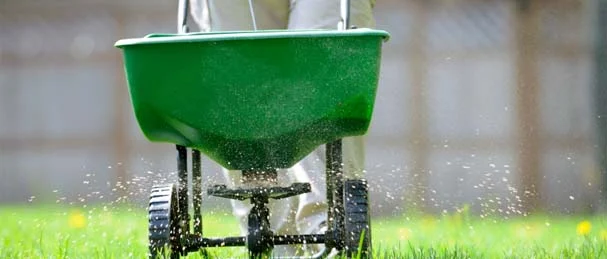
- Use a broadcast spreader for open lawn areas and a drop spreader near garden beds, pool edges, or waterways where precision matters and overspray is a real concern.
In Florida, keeping fertilizer out of drainage areas and bodies of water is an environmental responsibility.
- Overlap your spreader passes slightly. The light green stripes that appear in an under-fertilized lawn a week after application are an easy problem to prevent and an annoying one to explain.
- Don’t apply when heavy afternoon thunderstorms are in the forecast.
- After spreading, water lightly to move granules off the blades and into the soil.
- Sweep any product that lands on driveways or sidewalks back onto the lawn before watering. Granules sitting on impervious surfaces go directly into storm drains when it rains.
4 Mistakes that Lead to Disappointing Results
Fertilizing too early in the season is the one most common mistakes homeowners make. The urge to get started when the weather warms up can feed weeds and risk runoff. The thermometer check takes less than a minute and prevents this entirely.
Applying too much, especially with quick-release nitrogen, causes lawn burn. When the recommended rate feels conservative, use it anyway. Slightly under-feeding produces better results than slightly over-feeding.
Fertilizing before rain in Florida is a particular problem because the state’s afternoon storm pattern means heavy rain can arrive hours after a clear morning. Check the hourly forecast, not just the daily outlook.
Feeding the wrong grass type at the wrong time creates stress that accumulates. St. Augustine doesn’t need what Bermuda needs, and neither of them needs what a cool-season grass needs. Identifying what you’re growing before deciding when and how to feed it is the foundation the rest of the schedule rests on.
What Makes Lawn Fertilization Work Better?
A few complementary habits amplify the results that fertilizer alone produces.
Deep, Infrequent Irrigation
This encourages roots to grow downward rather than staying at the surface. Deeper roots pull nutrients from a larger soil volume, which makes each fertilizer application more effective. Florida homeowners who water shallowly every day often find their fertilizer results underwhelming — the root system simply isn’t developed enough to use it efficiently.
Leaving Grass Clippings
It’s an important step to take after mowing since this returns nitrogen to the soil at no cost. A mulching mower turns every mow into a minor nutrient application.
Soil Testing
This reveals what’s actually happening below the surface, from pH levels and nutrient availability to organic matter content. In Florida’s sandy soils, pH drift is common and can make applied fertilizer less effective even when timing and application rates are right.
Lawn Fertilization FAQs of Florida Homeowners
-
Can you fertilize too much?
Yes. Burned turf, thatch accumulation, and nutrient runoff into Florida’s waterways are all real consequences.
-
Should I fertilize before or after rain?
Apply on dry grass and water lightly afterward. In Florida’s rainy season, checking the forecast is extremely important.
-
Should I fertilize if the lawn looks green?
Color tells you one thing. Growth rate, density, and how the lawn performs under stress tell you much more. A lawn can look green and still be running low on the nutrients that build resilience and root depth.
-
What month is best?
For St. Augustine, Bermuda, and Zoysia in Florida, late spring (around May) and early fall (around September) are the two most productive windows.
Get Professional Lawn Care From Luv-A-Lawn!
A well-run fertilization program requires consistent attention to timing, product selection, application rates, and grass-specific scheduling across multiple windows every year. The variables compound, and getting all of them right consistently takes more attention than most busy homeowners want to give.
If you’re ready to fertilize the right way, reach out to the lawn care experts at Luv-A-Lawn! We proudly serve several Florida cities and the surrounding communities, ensuring high-quality lawn care and pest control services across the region: