
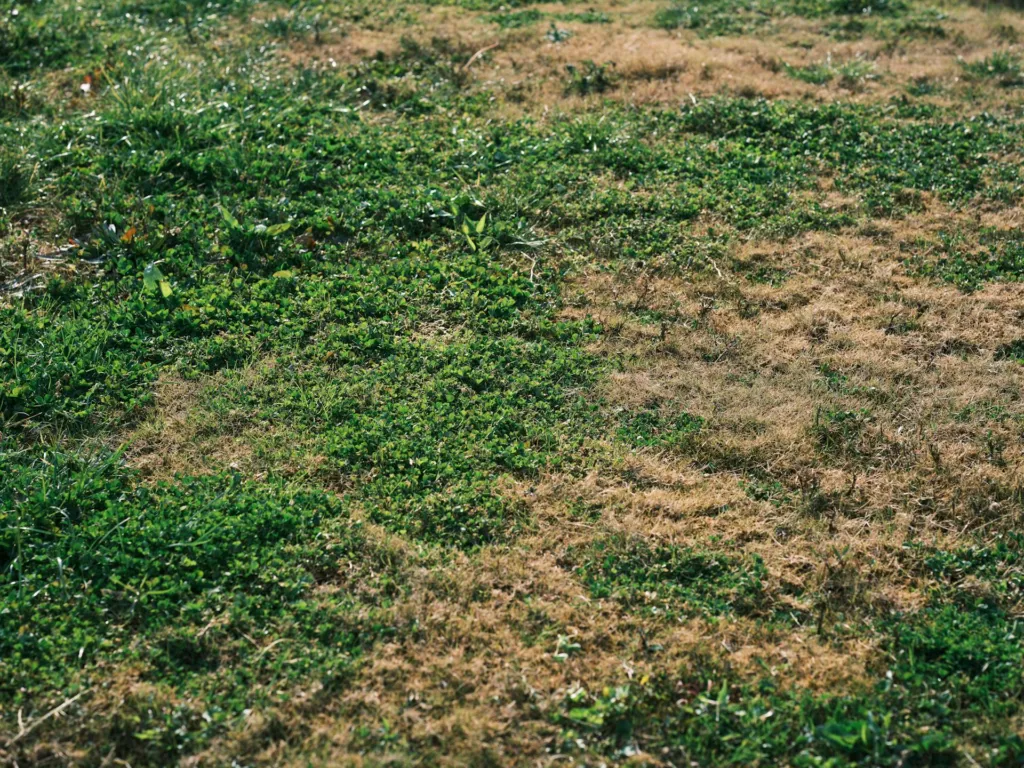
How to Bring Dead Grass Back to Life in Florida
Posted on January 19, 2026
What to Do When Lawns Are Dead or Simply Dormant
It’s easy to panic when your lawn withers from green to brown – the sight of what looks like dead grass is enough to make you wonder if you’ve failed at keeping your yard healthy. Should you just rip it all out and replace it with a lawn of dirt and gravel?
Before you leap to any drastic conclusions – and hopefully avoid some costly mistakes – let’s try to figure out what’s really going on with your lawn. Read on to learn the difference between dead grass and dormant grass. Plus, get professional tips from the experts at Luv-A-Lawn!
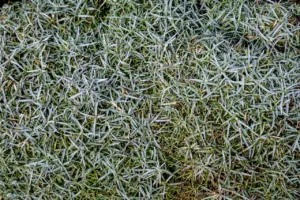
Dormant Grass vs Dead Grass
Dormancy isn’t always a bad thing. Think of it like the grass is just hibernating. It’s not dead yet, it’s just conserving energy for better times ahead. On the other hand, when your lawn is actually dead, the roots and crown have given up the ghost.
So how can you tell what’s going on? You’ve got to get a little up close and personal with your lawn – grab a knee and part those brown blades to see what’s going on at the base. If you still see a hint of green near the crown (that’s the bit where your grass’s roots meet its shoots), then it’s just dormant.
Another trick to try is the pull test. Grab a handful of your grass and give it a gentle tug. Dormant grass will stay put because its roots are still healthy. Dead grass won’t resist when you pull it – it’ll come up easy.
If your brown lawn is uniformly tanned or straw-colored, with all the blades standing upright, it’s probably just dormant. But if the colour patchy, it starts to look mushy or smells bad – then you’ve got bigger problems on your hands.
Dormancy: What’s Going On Behind the Scenes?
In the South during winter, your lawn may have gone dormant. But don’t worry! It’s not dead…it’s just in a state similar to sleeping. Warm-season grasses (like Bermuda, Zoysia, Bahia and St. Augustine) will stop growing and become brown. That’s because the sun is not shining as brightly and the cooler temperatures have an effect on the growth.
Why is this the case? The main cause is that photosynthesis becomes more difficult in the winter. However, that is not the only reason. Underground, Nature is still at work. The soil is being rejuvenated through decomposition and nutrient cycling, gradually releasing the nutrients that will help your lawn to grow again in spring.
As the seasons shift, energy stored in the roots and crown starts to activate. The crown is the area where the grass’s roots meet its shoots. It’s the core of the plant. With the increase in temperature, your lawn begins to ‘wake up’ and soon, it will be growing again, and the green color will be back.
Seasonal Dormancy Differences
Without adequate water, cool-season lawns, such as fescue or bluegrass, become dormant in the summer. They will be brown in July and August, surviving the hot and dry months until September when the temperature drops.
Warm-season lawns in Florida are quite the contrary. They go brown in winter and come back more vigorous in the spring, staying green all summer when cool-season grasses would have perished.
Where you live has an impact on the type of grass you have, as well. In North Carolina’s transition zone, warm-season grass could go dormant as soon as the nighttime temperature falls below 50°F in late fall. In the South, these same grass varieties may not enter dormancy until December.
Regional & Season-Based Lawn Revival Tips
Where you live changes everything. What works up north can flop hard in the south.
Southern Warm-Season Lawns
Spring is your big window for a comeback. Late April through June is prime time for Bermuda, Zoysia, St. Augustine, and Bahia.
Late summer or early fall is when you get your lawn ready for next year. That’s the time for a final round of fertilizer, knocking out any stubborn weeds, and setting things up so your grass can go dormant and bounce back strong in spring.
Northern Cool-Season Lawns
Best times to revive your lawn in the Midwest? Early spring (late March through May) and early fall (late August through October). Fall’s actually your best shot since you avoid summer stress right after the grass comes up.
After a tough summer, overseeding in fall thickens up thin spots and lets you plant newer, hardier grass types. Your soil will probably need a nitrogen boost after winter because a lot of it leaches away or gets locked up in the cold.
In spring, keep an eye out for fungal issues like snow mold. You’ll notice gray, matted patches after the snow melts. Rake them out and, if needed, hit them with a fungicide to stop it from spreading.
Why Does Grass Die or Turn Brown?
Brown grass that is truly dead is a real problem. You have to find out what caused the death before you try to repair it.
Compacted soil. Heavy clay soil, constant foot traffic or years without aeration turn the ground hard. Roots cannot extend, water cannot soak in and air cannot move. The lawn slowly declines.
Insects. Grubs chew roots and kill grass from below – damage appears only after much of the root system is gone. Crane fly larvae, billbugs also chinch bugs cause similar harm depending on region and grass type.
Soil pH. When the pH drifts far from neutral, the grass cannot take up nutrients. Many lawns need a range between 6.0 next to 7.0. Outside that range the grass steadily weakens.
Mowing too low. Removing more than one third of the blade at a cut shocks the plant. The grass cannot produce enough food, roots stay near the surface and stress invites disease or drought damage.
Thatch. This is the springy layer of dead roots but also stems that sits between the green blades and the soil. When it builds past half an inch, water runs off the top as well as disease organisms live in the mat.
Lawn diseases and fungi. These often show up as irregular brown areas. Brown patch fungus forms large dead rings. Dollar spot creates small round dead spots. Red thread first gives a pink cast then the grass turns tan.
Dog urine. It leaves brown centres ringed by bright green – the concentrated nitrogen burns the middle or feeds the border. Dog owners see this often.
Lawn care timing. Planting seed or applying products at the wrong season stresses the turf plus can kill large sections.
Watering errors. If you supply too little water, the grass becomes stressed, the roots shorten and in the end the plant dies. Too much water is just as harmful. Roots drown without oxygen plus rot and fungi follow. Uneven sprinkler coverage also leaves some areas dry.
5 Steps to Bring A Dead Lawn Back to Life
- Figure Out What’s Wrong With Your Lawn
First things first. Test your soil. It’ll tell you if your lawn’s pH is off, what nutrients it’s missing, and how much organic material is in there. Then, check if water’s pooling anywhere after a heavy rain. That’s a bad sign.
Next, grab some grass patches and check the roots. Brown and soggy? If the roots are shallow and dying, you’ve probably got a soil or watering issue. If they’re deep and strong, the problem’s somewhere else.
- Get Your Lawn Ready
Kill the weeds first. Then mow it down to about 1-2 inches (short enough so new seeds actually hit dirt instead of just sitting on dead grass).
Rake up all the junk like leaves and sticks. If the thatch layer’s thicker than half an inch, rip it up.
Last step? Aerate. Basically, punch holes in your lawn so it can breathe. Makes it easier for water and nutrients to soak in.
- Bring That Lawn Back to Life
Grass seeds on hard dirt? They’ll dry out before they even get started. And if you skip fertilizer, any new grass that does pop up will struggle.
Timing’s key. Cool-season grass loves early fall and spring’s your backup. Soil’s still warm enough (50-65°F) for seeds to sprout. Warm-season grass? Late spring or early summer, when the ground’s nice and toasty (65-70°F).
After spreading seed, rake it lightly. Some homeowners even throw a thin layer of compost or topsoil on top to help.
- Water Like a Pro
Keep the soil damp (not soaked) for 2-3 weeks. That usually means watering daily. Maybe twice if it’s scorching or windy. Just make sure the top inch feels a little wet when you poke it.
Once the grass hits 1-2 inches (few weeks in), switch to deeper, less frequent watering. Forces roots to grow down strong.
By weeks 4-6, you can relax a little. Just give it 2 inches of water per week, split into one or two big drinks instead of tiny sips.
- Keep It Up
Mow often, but don’t scalp it. Never cut more than a third of the grass height at once. And keep watering, even after the new stuff looks good.
Oh, and feed it! Regular fertilizer keeps it thick and green..
FAQs About Dead Grass
Should you mow dead grass?
Yes, especially if you’re adding new seed. Cutting it low helps you see bare spots and gives new seeds a better shot at touching soil.
How long can grass go without water?
It depends. Cool-season grasses can survive 2 to 4 weeks before you see real damage. Warm-season types like Bermuda can hang on for 3 to 6 weeks in dormancy, but after that, they may die without rain.
Can brown grass turn green again?
If it’s just dormant, absolutely. If it’s truly dead, it’s not coming back. Do the pull test and check the base of the plant for green.
Can you reseed right over dead grass?
You can, but it rarely works well. Dead grass blocks seeds from reaching the soil, shades out new sprouts, and can carry disease.
Will fertilizer bring dead grass back?
No, fertilizer only helps living plants. It can help healthy grass grow faster and fill in bare spots, but it won’t revive dead patches.
What if only some patches are dead?
Just fix those spots. No need to redo your whole yard. Figure out what killed those areas, treat the problem, prep the soil, and reseed. Use the same type of grass for best results.
Refresh Your Florida Lawn With Expert Help
If you don’t want to use your free time (and energy) to take care of every little lawn care detail, reach out to your local pest control experts at Luv-A-Lawn. We proudly serve several Florida cities and the surrounding communities, ensuring high-quality lawn care and pest control services across the region: