
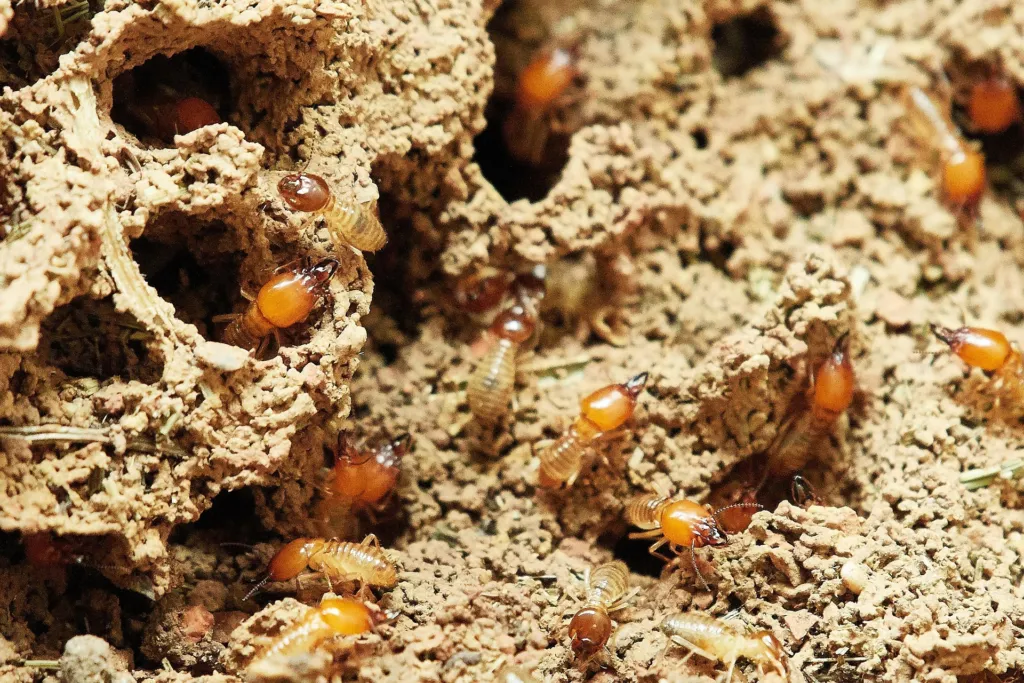
How to Get Rid of Termites Quickly & Effectively
Posted on August 14, 2025
For Florida Homeowners, Termites Are a Problem You Can’t Ignore
Termites are great for breaking down dead trees but an absolute nightmare when they set their sights on your home. These silent destroyers chew through wood, flooring, and even wallpaper without a sound, costing homeowners billions in repairs every year.
The worst part? By the time you notice the damage, it’s often too late for a quick fix. That’s why calling Luv-A-Lawn is crucial. Whether you’re dealing with a minor scare or a full-blown invasion, we’ll walk you through how to spot, stop, and prevent termites in Central Florida for good.
How to Tell If You Have Termites
Common Signs of Termite Infestation
They may be sneaky, but termites leave clues like the following.
- Mud tubes
- These pencil-thin tunnels along your foundation or walls are like termite highways, connecting their underground colony to your home’s wood.
- Discarded wings
- After swarmers (flying termites) find a new home, they shed their wings. Finding these near windowsills? Bad news.
- Hollow-sounding or buckling wood
- Tap on baseboards or beams. If they sound empty, termites may have feasted inside.
- Frass (termite droppings)
- Drywood termites leave behind tiny wood-colored pellets that look like sawdust.
- Tight-fitting windows and doors
- Warped frames from internal damage can make these household elements harder to open.
Get to Know Four Types of Termites
Subterranean Termites
This is the most destructive termite species in the U.S. that lives underground in soil and builds mud tubes to access above-ground wood.
- Signs of infestation:
-
-
- Mud tubes along foundations
- Swarmers (dark-colored with two pairs of wings)
- Damaged wood with soil inside and a “layered” appearance (they eat with the grain)
-
- Regions found:
-
- Present in every U.S. state except Alaska
- Most common in warm, humid areas (Southeast, Gulf Coast, Southern California)
Drywood Termites
This species lives entirely inside wood (no soil contact needed).
- Signs of infestation:
-
-
- Frass (sawdust-like droppings)
- Discarded wings near windows/doors
- Wood damage with “chambered” tunnels (they eat across the grain)
-
- Regions found:
-
- Common in coastal and arid climates (California, Florida, Hawaii, Southwest)
- Enter homes through exposed wood or infested furniture
Dampwood Termites
These termites thrive in moist or decaying wood.
- Signs of infestation:
-
-
- Found in rotten wood, logs, stumps, or water-damaged structures
- Smooth, sandpapered-looking tunnels inside wood
-
- Regions found:
-
- Pacific Northwest, Gulf Coast, and humid Florida
- Often found in sheds, fence posts, and old firewood
Formosan Termites
This is a highly aggressive subterranean species of “super termites” that form massive colonies (millions of termites).
- Signs of infestation:
-
-
- Extremely rapid wood destruction
- Large mud nests inside walls
- Swarmers in late spring/summer
-
- Regions found:
-
- Primarily warmer areas of the Deep South (Louisiana, Texas, Florida, Alabama, Georgia, South Carolina)
- One of the most destructive termite species in the U.S.
How to Get Rid of Termites
DIY Termite Treatments (For Early/Minor Activity)
- Foam termiticide
- Termite galleries are filled with foam termiticides, which kill pests instantly. Use an injection kit to apply directly into mud tubes or infested wood. It’s most effective when the tunnels are accessible and the infestation is small and localized.
- Bait stations
- Termites carry poisoned cellulose from bait stations back to their colony. Place them around the perimeter of your house at intervals of 10 to 20 feet. Although slow, it works well in eradicating a whole colony.
- Liquid termiticide barrier
- When applied to soil, it forms a chemical “moat” around your foundation. This stops termites from entering and kills those that are inside by denying them access to moisture. For best results, mix and apply properly.
- Nematodes
- Termites are the natural prey of these microscopic worms. Put them in places that are wet and infested. It’s an environmentally friendly choice, but it might not completely get rid of big colonies, making it a better option when combined with other techniques.
- Boric acid & orange oil
- Termites that consume boric acid are poisoned, but termites that come into contact with orange oil are killed. Apply boric acid powder to exposed areas or inject orange oil straight into infected wood. It’s effective for minor infestations, but won’t get rid of whole colonies.
Why Does DIY Alone Usually Fail?
With numerous nesting locations, termite colonies can have anywhere from thousands to millions of hidden members. Usually, do-it-yourself treatments only target surface-level activity, ignoring the main colony.
Termites can be dispersed by improper application, making the infestation worse. You’re typically only treating symptoms rather than resolving the issue if you do not use professional-grade products and techniques.
Professional Termite Treatment Options
Expert Termite Identification & Inspection
To identify termite species, find nests, and evaluate damage, certified technicians use specialized equipment such as moisture meters and infrared cameras. This important initial step establishes the best course of action for your particular circumstance, and many businesses offer digital reports for clarity.
Systems for Termite Baiting
Worker termites carry poisoned cellulose from these discrete stations around your property back to their colony. Bait systems, which frequently include continuous monitoring services, are very effective against subterranean termites with little disturbance to the landscape, despite their slower-acting nature (taking months for complete elimination).
Barriers with Liquid Termiticide
To provide an instant barrier of protection, technicians dig a trench around your foundation and spray specialized insecticide. When used properly, modern formulas that spread poison through the colony through the “transfer effect” usually offer multiple years of underground termite protection.
Specific Spot Treatments
Professionals use tiny drilled holes to inject termiticide foam or dust directly into infested wood in order to treat localized drywood termite infestations. This minimally invasive method, which is frequently used in conjunction with monitoring for total control, kills termites on contact while providing residual protection.
Fumigation of Structures (Tenting)
This intensive treatment, which releases penetrating fumigant gas and seals the building under tarps, is required for extensive drywood termite infestations. It reaches termites deep within walls and structural wood, achieving nearly 100% elimination. However, it means temporary relocation for the homeowner.
Plans for Integrated Termite Management
The best solutions combine several techniques, such as wood repairs, bait stations, and soil treatments, depending on the weaknesses in your house. In order to avoid future infestations and ultimately save money on expensive structural damage, these all-inclusive programs frequently include yearly inspections.
When to Call a Professional
Wondering how to get rid of termites in the most efficient way? There comes a point when professional intervention is absolutely necessary. Seeing active swarmers? This means a mature colony nearby is producing new kings and queens, so the problem is already significant.
Noticing visible structural damage like sagging floors, buckling wood, or crumbling drywall? This suggests termites have been feasting for months or even years. At this stage, the infestation has progressed beyond what store-bought products can handle.
Did your DIY treatments fail? If termite activity continues after multiple attempts, the colony has likely adapted or simply grown too large for consumer-grade solutions to make a dent.
Professional exterminators bring tools and techniques that DIYers can’t match. Advanced bait systems like Sentricon use colony elimination technology that actually works. And commercial-grade termiticides create impenetrable barriers around your home’s perimeter.
How to Prevent Termites With Long-Term Solutions
Here are some of the most impactful termite prevention tips available that you can do yourself.
Control Any Moisture
- Repair leaks in faucets, roofs, and pipes right away.
- Improve the drainage around the foundation of your house by sloping the soil away from it.
- Gutter cleaning should be done frequently to avoid water accumulation.
- In moist crawl spaces and basements, use dehumidifiers.
- Make sure the attics and underfloors have adequate ventilation.
Limit Wood-to-Soil Contact
- Keep mulch, lumber, and firewood at least two inches from the foundation of your house.
- Use metal racks or concrete blocks instead of placing wood directly on the ground.
- Tree branches and shrubs should be trimmed to avoid touching the house.
- Use gravel or rubber substitutes in place of wood mulch close to foundations.
Seal Any Entry Points
- Examine exterior walls for loose siding, gaps around pipes, and foundation cracks.
- Use caulk or weatherstripping to seal the openings around windows, doors, and utility lines.
- Repair damaged roof shingles and vents to prevent moisture buildup.
Maintain Your Property
- Clear your yard of old wooden debris, dead trees, and stumps.
- Paper, cardboard, and other cellulose products should be kept in airtight plastic containers rather than on the ground.
- Compost piles should be kept away from homes.
Schedule Regular Inspections for Termites
- Once a year, or more frequently in high-risk areas, have a professional inspection.
- Look for mud tubes, frass, or hollow wood since early detection saves thousands on repairs.
Regional & Seasonal Considerations
The majority of termite species swarm in the spring and fall when reproductive cycles are triggered by warm, humid weather. Termite activity exhibits clear seasonal patterns. Because of this, the best seasons for preventive treatments are late winter and late summer.
However, termite risks differ significantly by location. The main threats in the hot, humid South are fast-spreading subterranean species and aggressive Formosan termites.
Moisture control is crucial in coastal and rainy regions because dampwood termites feed on wood that has been soaked.
In the meantime, drywood termites, which typically nest in attics and wooden structures, infest homes in coastal and arid regions like Florida and the Southwest without needing to come into contact with soil.
Knowing these regional trends enables you to schedule inspections and treatments for optimal protection, regardless of where you live.
FAQs About Termite Control in Florida
Do termites bite humans?
Termites do not bite humans. They only consume cellulose and wood. They are not hostile toward people or pets, despite having powerful jaws for gnawing through wood.
Can you get rid of termites permanently?
Professional solutions (such as liquid barriers and bait systems) can eradicate active colonies and offer long-term protection, but no treatment can guarantee termites won’t return. Frequent inspections aid in the early detection of new infestations.
How long does termite treatment last?
Liquid termiticides last multiple years, bait stations require ongoing monitoring/replacement, fumigation (tenting) is a one-time treatment but it doesn’t prevent future infestations, and yearly inspections help maintain protection.
What attracts termites to a home?
There are several things that may attract them: Moisture (leaky pipes, poor drainage), wood-to-soil contact (mulch, firewood, deck posts touching ground), cracks in foundations, and cellulose materials (cardboard, paper, wood debris near the house).
What does a termite look like?
- Workers: Small (¼ inch), soft-bodied, creamy-white
- Swarmers (winged termites): Dark brown/black, ½ inch long, two equal-length wings
- Soldiers: Larger heads with pincers, pale yellow-brown
Conclusion
If you’re seeing mud tubes, active swarmers, or any structural damage, professional help is essential. The same goes if DIY attempts fail to stop termite activity. Because termites never stop working to destroy your home.
Not sure how to get rid of termites permanently? Reach out to Luv-A-Lawn today! We proudly serve several Florida cities and the surrounding communities, ensuring high-quality lawn care and pest control services across the region: